Nature and environment - Seas and waters - Oceans - Sound propagation

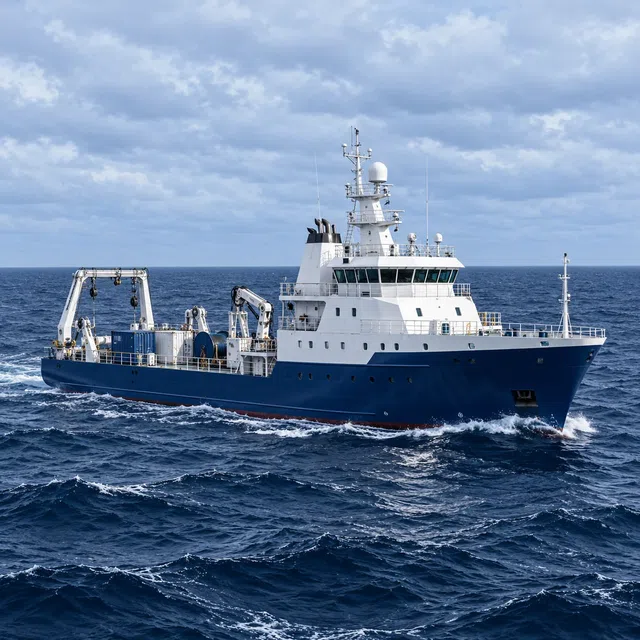
A research ship uses an echo sounder to measure water depth directly beneath it. Together with the speed of sound, which measurement is crucial?

Correct!
An echo sounder sends a short pulse of sound into the water. The seafloor reflects part of the sound, which is received as an echo. The instrument measures the time between transmitting the pulse and receiving this echo. The speed of sound allows the distance traveled to be calculated. The sound has traveled both down to the bottom and back to the instrument. For a vertical measurement, half the total distance therefore equals the distance between the transducer and the seafloor. To determine depth below the water surface, the transducer's depth below that surface must also be taken into account. The speed of sound is not the same everywhere in the ocean. Accurate surveys therefore measure it locally and account for it during processing. A multibeam echo sounder also measures many directions side by side; for slanted sound paths, their angles matter too. Numerous measurements combine to form a map of the bottom's shape. The strength of the returning signal can also be useful. As backscatter, it provides clues about the nature of the bottom. However, the echo's travel time is the key measurement for determining distance.