Travel and landmarks - Landmarks and buildings - Spain - Roman architecture - Segovia

How are the large granite blocks of the Roman aqueduct in Segovia, Spain, joined together?

Correct!
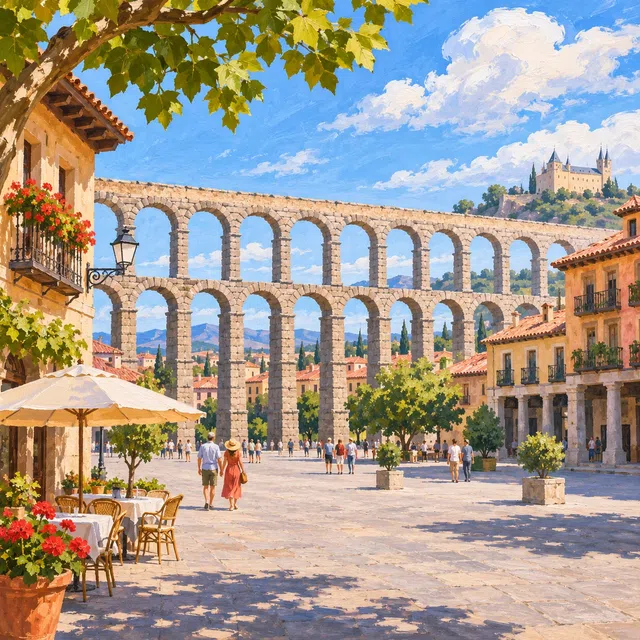
The granite blocks of the Segovia aqueduct are dry fitted: there is no mortar between them. Precisely worked bearing surfaces, the weight of the stones themselves, and the geometry of the arches keep the structure in balance. The joints are therefore part of the original construction principle, rather than gaps left by mortar that later fell out. The aqueduct supplied the city with water. Its tall arcades are just the most visible part of a longer water conduit. In the arches, loads are transmitted as compressive forces to the piers. The structure shows how careful stoneworking and well-planned structural design made large spans possible even without a binding layer of mortar. This does not mean that the Romans generally avoided mortar or concrete; the question concerns the specific construction of these granite blocks.