Geography - Rivers, lakes and mountains - Alps - Dolomites

In what environment did many carbonate rocks that now make up the Dolomites in the Alps form?

Correct!
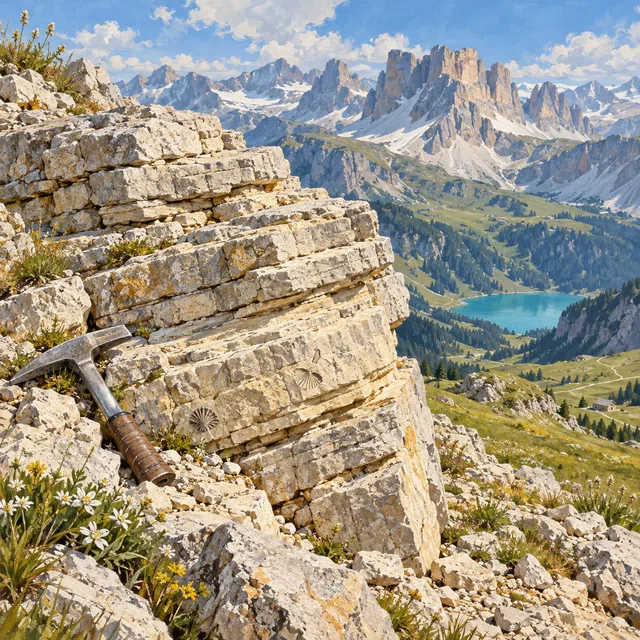
Many of the carbonate rocks of today’s Dolomites formed in warm marine environments. The carbonate platforms and adjacent basins of the Triassic are particularly important to the region’s geological history. On the platforms, carbonate-producing organisms and chemical deposition acted together, among other processes. The present high-mountain landscape did not exist in its current form at that time. The rocks were tectonically deformed and uplifted later, then sculpted by weathering, water, and ice. This does not mean that all rocks of the Dolomites are the same age or formed exclusively in shallow water: deeper marine basins and volcanic phases also belong to the region’s history. The other settings are real depositional environments. The illustration presents an interpretive reconstruction of a warm shallow sea, not an exact snapshot of a particular Triassic ecosystem.