Travel and landmarks - Landmarks and buildings - Bridges - Peru

What are the load-bearing ropes of Peru’s traditionally renewed Q’eswachaka Bridge made from?

Correct!
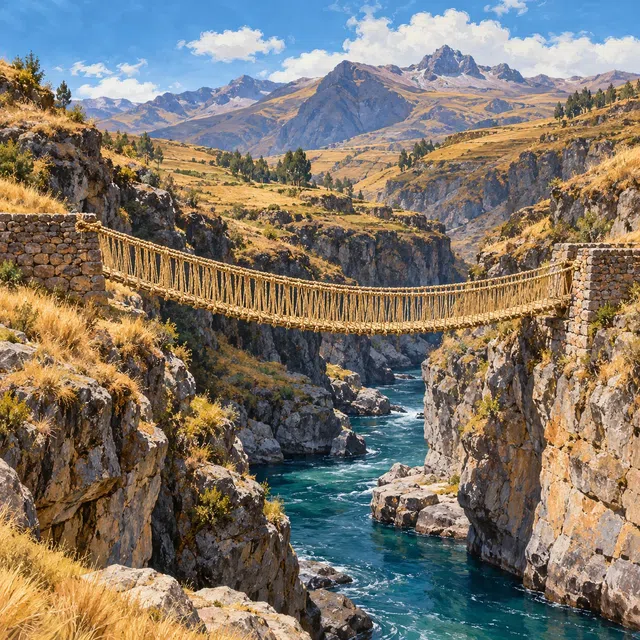
The load-bearing ropes of the Q’eswachaka Bridge are made from grass fibers. Families cut the local Andean grass, dry or otherwise prepare it, and first twist it into thin strands. These are braided into increasingly thick ropes and finally into the large supporting ropes. The suspension bridge crosses an Apurímac gorge in the southern Andes. Quechua-speaking communities traditionally renew it every year using techniques passed down through generations. The large ropes are attached to stone abutments; the woven walkway and side protection are then added. This shared work involves more than repairing a transport route. It passes on craft knowledge within families and strengthens relationships between the participating communities. The associated knowledge, skills, and rituals were inscribed on UNESCO’s Intangible Cultural Heritage list in 2013.