Cars and mobility - Safety - Vehicle safety - Automotive technology

What does the brake booster do when a car’s brakes are applied?

Correct!
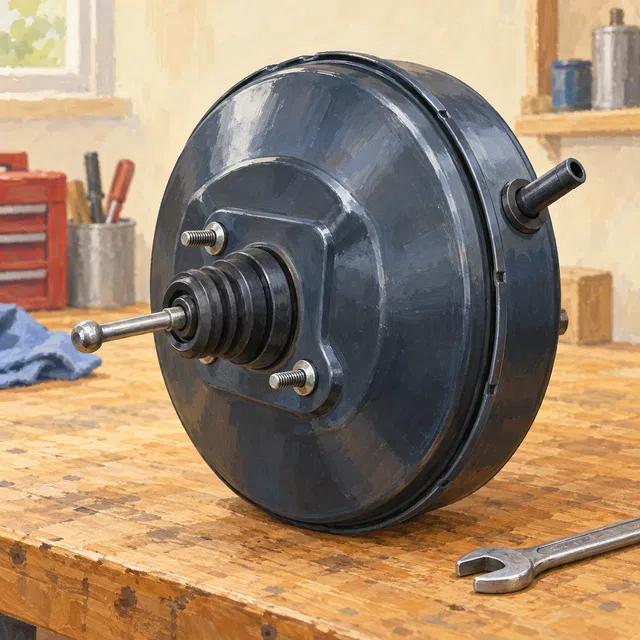
The brake booster assists the force applied by the driver’s foot. This reduces the pedal force needed to achieve a given braking effect. In a common design, a movable diaphragm separates two chambers. During braking, a pressure difference develops between them and assists movement toward the master cylinder. This adds assistance to the pedal force. Modern systems can also provide this assistance with an electric motor, without needing a vacuum. Preventing wheels from locking is the job of ABS; brake boosting and antilock control perform different functions.
In a common design, a movable diaphragm separates two chambers. During braking, a pressure difference develops between them and assists movement toward the master cylinder. This adds assistance to the pedal force. Modern systems can also provide this assistance with an electric motor, without needing a vacuum. Preventing wheels from locking is the job of ABS; brake boosting and antilock control perform different functions.