Cars and mobility - Automotive technology - Engine cooling

What does the thermostat do in an internal combustion engine's cooling system?

Correct!
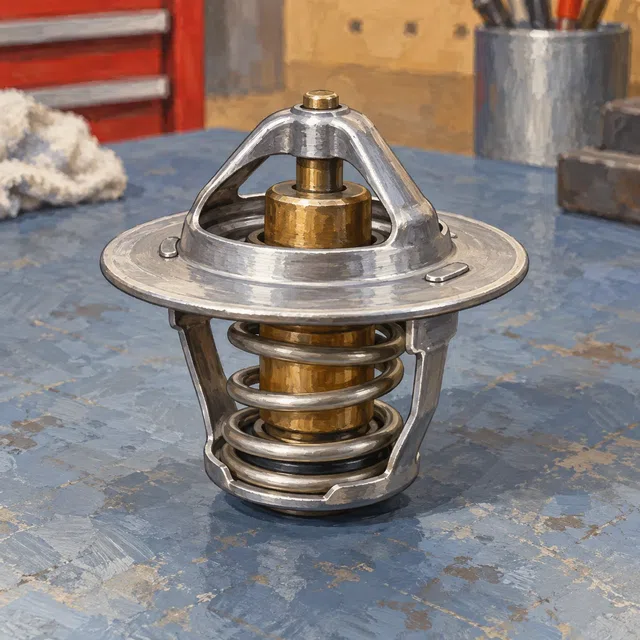
The thermostat regulates how much coolant flows to the radiator according to temperature. It acts as a valve in the cooling circuit. When the engine is cold, the route to the radiator initially remains largely closed. This helps the engine reach its operating temperature faster. As the coolant temperature rises, the thermostat opens progressively, allowing heat to be released through the radiator. The coolant pump provides circulation, while the radiator transfers heat to the surrounding air.
When the engine is cold, the route to the radiator initially remains largely closed. This helps the engine reach its operating temperature faster. As the coolant temperature rises, the thermostat opens progressively, allowing heat to be released through the radiator. The coolant pump provides circulation, while the radiator transfers heat to the surrounding air.