Animals - Insects - Animal anatomy

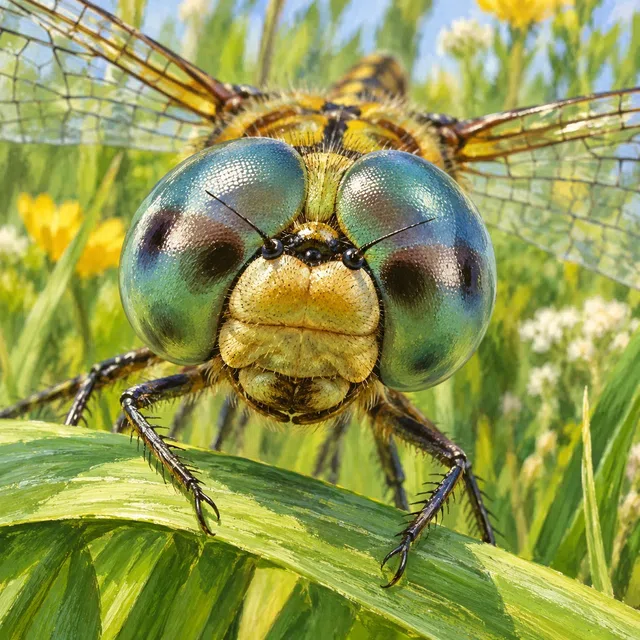
What is the basic structure of a dragonfly’s compound eye?

Correct!
A dragonfly’s compound eye consists of many small visual units called ommatidia. Their tightly packed facets are visible from outside. Each unit has an optical component and a light-sensitive component. The individual units collect light from different directions. The nervous system processes their signals. This does not produce a stack of complete individual images, as some drawings with repeated scenes suggest. Instead, many spatially distributed pieces of light information are processed together. The number and construction of ommatidia vary greatly among insects. Compound eyes are therefore not identical miniature cameras in every species. Their structure helps explain why insect vision has different characteristics from vision through our lens-based eyes.