
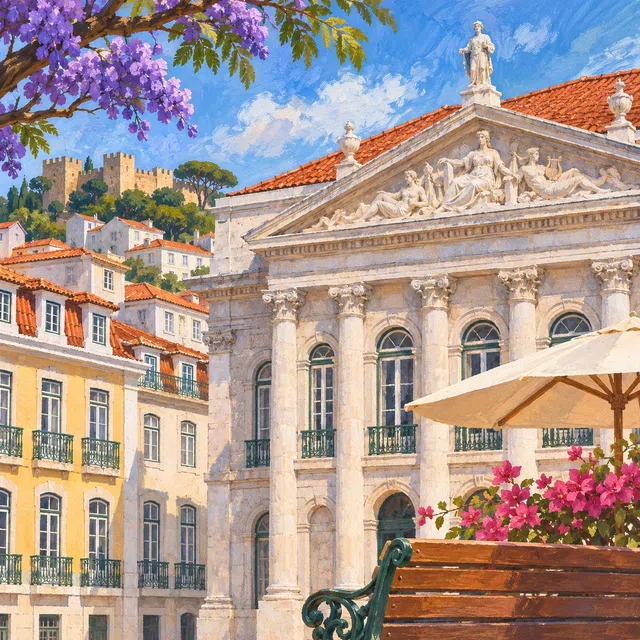
Travel and landmarks - Landmarks and buildings - Portugal - Decorative paving - Lisbon

What motif does the famous black-and-white “Mar Largo” paving pattern on Rossio Square in Lisbon, Portugal, form?

Correct!
The pattern consists of alternating light and dark bands of waves. Many small paving stones are arranged to create a large surface that seems to move. The individual stones are visible up close, while the wave motif emerges from farther away. The design belongs to calçada portuguesa, the Portuguese art of ornamental stone paving. The name Mar Largo means roughly “broad sea” and suits its maritime imagery. The pattern is not printed with paint on a smooth surface; it is created by the arrangement of the stones. Lisbon's tourism organization describes Rossio as an important place in the development and spread of this paving tradition. Other motifs, such as stars or plant ornaments, also occur in decorative paving, but they are not the pattern meant here.