Travel and landmarks - Landmarks and buildings - Urban history - Kaunas - Lithuania

What role did Kaunas play in the Lithuanian state between the world wars?

Correct!
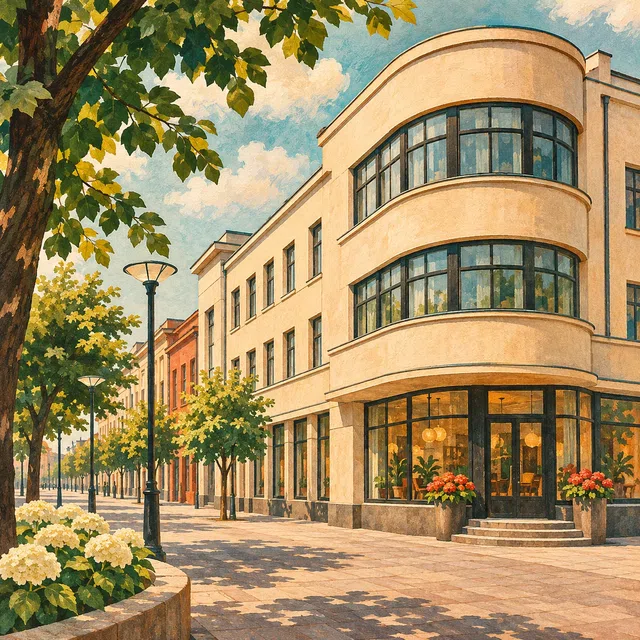
Kaunas served as the temporary capital of independent Lithuania between the world wars. The new role spurred rapid development as government offices, public institutions, and housing all needed new buildings. The city changed substantially in just a few decades. The architecture built from 1919 to 1939 still shapes important parts of Kaunas. The new buildings drew on international modernist ideas and combined them with local approaches to design. Their varied uses and forms make the surviving buildings especially diverse. The UNESCO World Heritage site “Modernist Kaunas: Architecture of Optimism, 1919–1939” recognizes the connection between urban development, social change, and architecture. Its title reflects the confidence with which people set about building a modern city.