History - Ancient history - Ancient Egypt - Architecture - Pyramids

What stone formed the original outer casing of the Great Pyramid in ancient Egypt?

Correct!
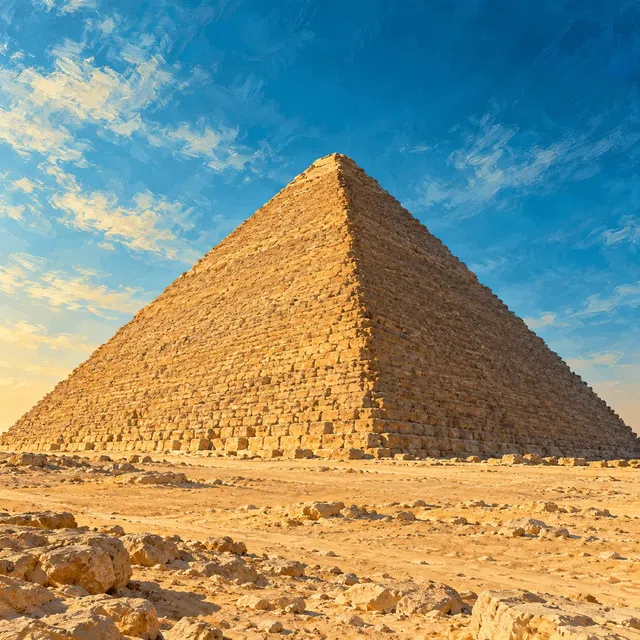
The Great Pyramid was originally covered with finely worked, pale limestone. The casing blocks came from the quarries at Tura and were transported by ship. Their sloping outer faces formed a smooth shell that appeared bright in sunlight. Today, the rougher blocks of the pyramid's core are mostly what we see. This core also consists largely of limestone, but from local sources. The difference therefore concerns not only rock type, but also the stones' origin, quality, and workmanship. Over the centuries, much of the casing was removed and reused as building material. Some casing stones survive at the foot of the pyramid. The Great Pyramid therefore looks very different today from how it did in the time of its builder, Khufu. A surviving casing block at National Museums Scotland illustrates the original shape and surface.