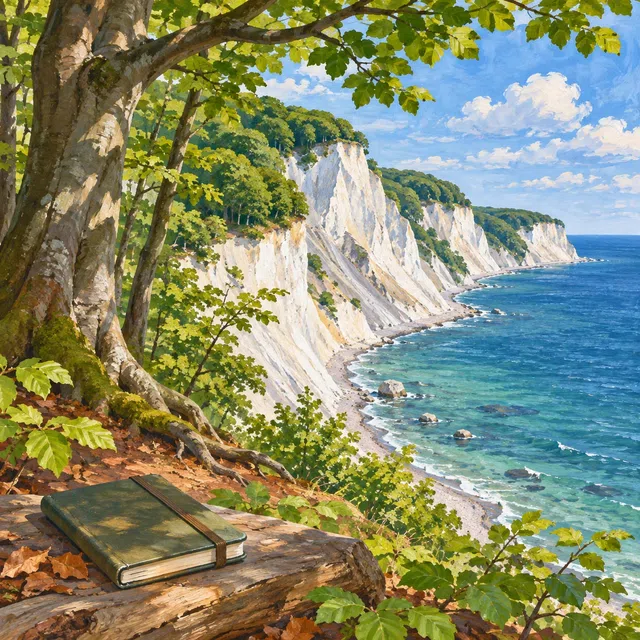
Nature and environment - Geology and natural phenomena - Geology - Møns Klint - Denmark

What tiny organisms produced the calcium carbonate plates that make up much of the chalk at Møns Klint in Denmark?

Correct!
The plates came from single-celled calcareous algae called coccolithophores. These microscopic marine organisms carry calcium carbonate plates. After the organisms died, their remains could sink to the seabed and build up into thick deposits over very long periods. Chalk is therefore not simply a ground-up coral reef. Diatoms are not the main source of these plates either, because their shells are made of silica. Larger fossils can also occur in chalk without forming the bulk of the rock. Later geological processes and the action of ice shaped the cliff we see today. This distinctive coastline thus preserves traces of an ancient sea as well as a much younger landscape history.