History - Ancient history - Socrates - Plato - Philosophy

Which approach is especially characteristic of Socrates in many of Plato's dialogues?

Correct!
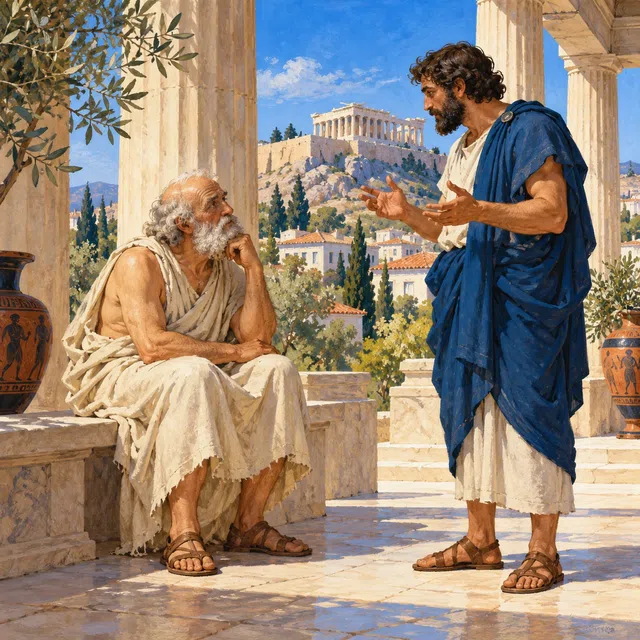
The Socrates of many Platonic dialogues asks further questions and examines whether statements are compatible with one another. An interlocutor may discover that an initial definition raises further difficulties. This form of examination is often called elenchus. The aim is not merely to provide a correct answer as quickly as possible. The participants are meant to examine their own assumptions. Some conversations end with an open problem rather than a settled formula of doctrine. Socrates left no philosophical writings of his own. Our picture depends on other authors, whose accounts differ. A statement about the character in Plato's dialogues is therefore more precise than a claim that every historical conversation involving Socrates followed exactly this pattern.