Home and Crafts - Furniture and Interior Styles - Interior design - Design history

Which interior style of the 1920s and 1930s often combined geometric forms with luxurious surfaces?

Correct!
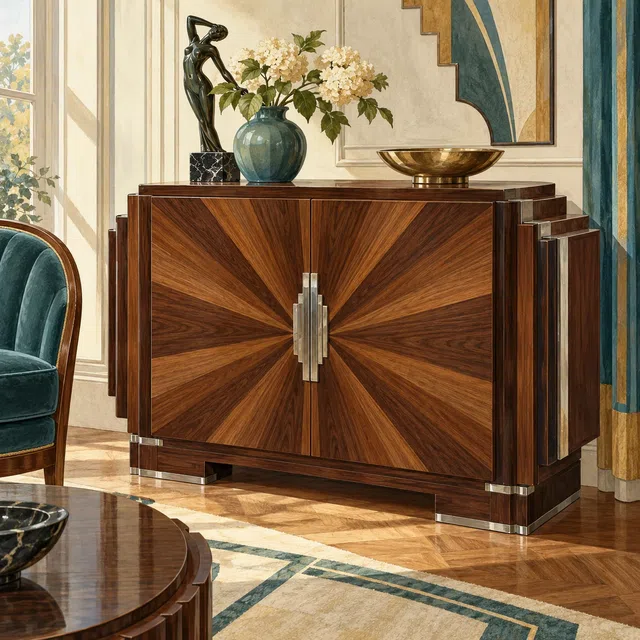
The style is Art Deco. It combined modern design with decorative elegance. In exclusive furniture, fine veneers, lacquer, metal, and carefully finished surfaces could meet clear geometric forms. However, Art Deco was not limited to expensive individual pieces. Industrially produced objects and new materials also adopted its visual language. In the 1930s, for example, chrome-plated metal, glass, and plastics became increasingly important. This allowed the aesthetic to reach less wealthy households as well. An Art Deco interior therefore need not consist solely of straight lines or expensive materials. The style includes different approaches, including streamlined curves. Its defining quality is the interplay of modernity, decorative impact, and deliberately designed surfaces.