Fashion and Style - Accessories and Fashion History - Japan - Clothing - Kosode

Which sleeve feature characterizes a kosode from Edo-period Japan?

Correct!
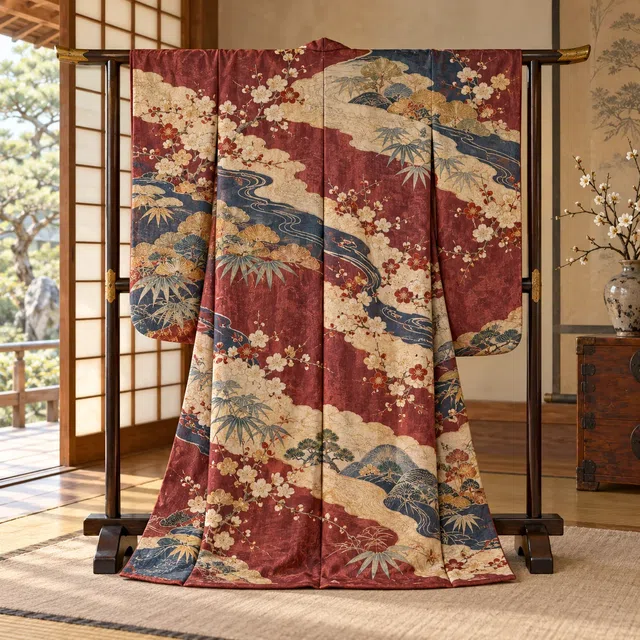
A kosode has comparatively small openings for the hands or wrists. This does not mean that the entire sleeve must be short. A large hanging area of fabric can be combined with a small opening through which the hand emerges. The kosode was an important predecessor of the garment type later known as the kimono. During the Edo period, these robes became important surfaces for textile design. Color, pattern placement, and workmanship could express differences in fashion and social standing. The name of the form must be distinguished from a particular decoration. Not every kosode bore the same pattern or was worn by the same group of people. Surviving examples also reveal alterations and reuse of textiles. The small sleeve opening is a structural feature, not a statement about a single unchanging clothing style.