Fashion and Style - Accessories and Fashion History - Textile production - Luxury goods

Why could deep, colorfast black fabric be an expensive luxury in the early modern period?

Correct!
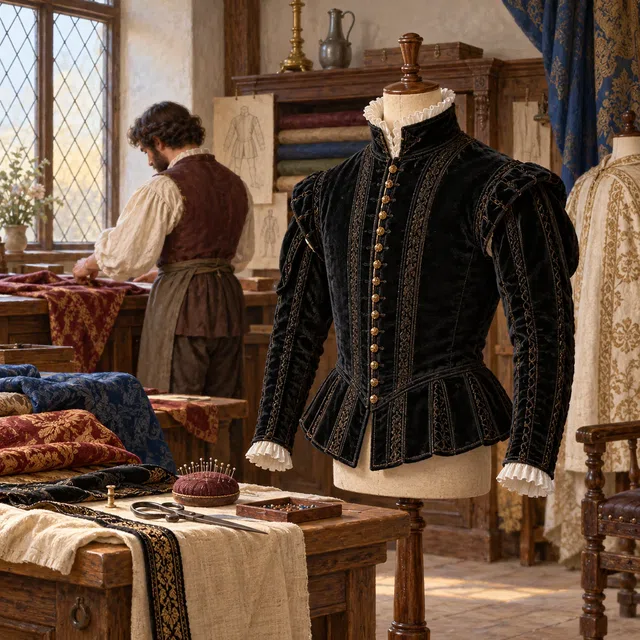
Producing a rich, lasting black with historical dyes was challenging. High-quality methods could require several dyeing stages and different dyestuffs. The additional work made fabrics dyed this way more expensive. One well-known method combined blue dyeing with a further red dyeing. Other recipes also existed, for example using plant materials containing tannins. It is therefore wrong to assume that all black clothing was equally expensive or reserved exclusively for the elite. Quality, base fabric, and dyeing method made a difference. In the European Renaissance and early modern period, deep black could express power, dignity, seriousness, or piety. A restrained shade therefore did not necessarily mean little material investment. Color, price, and social meaning must be considered together.