Art - Architecture - Great Wall of China - China

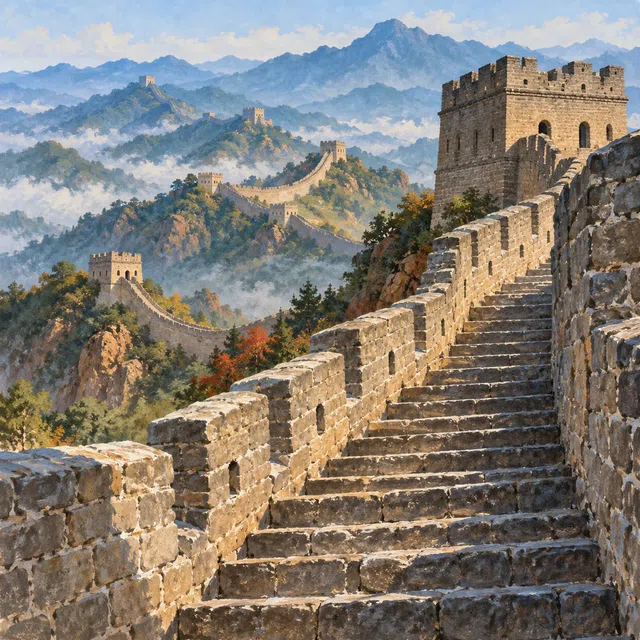
Why does the Great Wall of China follow high ground and ridges in many mountainous sections?

Correct!
High ground offered a wide view, while steep slopes could make an attack more difficult. The fortification thus made use of natural landforms. Mountains were not just an obstacle for the builders, but also part of the defenses. This does not mean that every elevated stretch was easy to build or supply. Transporting materials, obtaining water, and maintenance could be particularly demanding there. Blanket assumptions about a convenient building site are therefore misleading. The wall's route was also influenced by passes, valleys, roads, and changing military requirements; not every section follows a ridge. The answer image illustrates the relationship between elevation, visibility, and a difficult ascent. It shows an imagined landscape rather than a cartographic reconstruction of a particular front.