History - Inventions and discoveries - Movable-type printing - Johannes Gutenberg

Why was Johannes Gutenberg's movable type especially practical for printing new texts?

Correct!
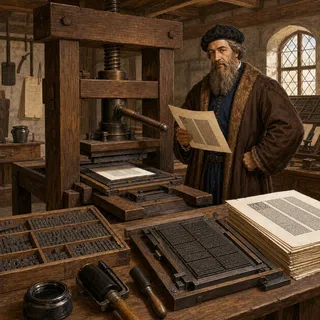
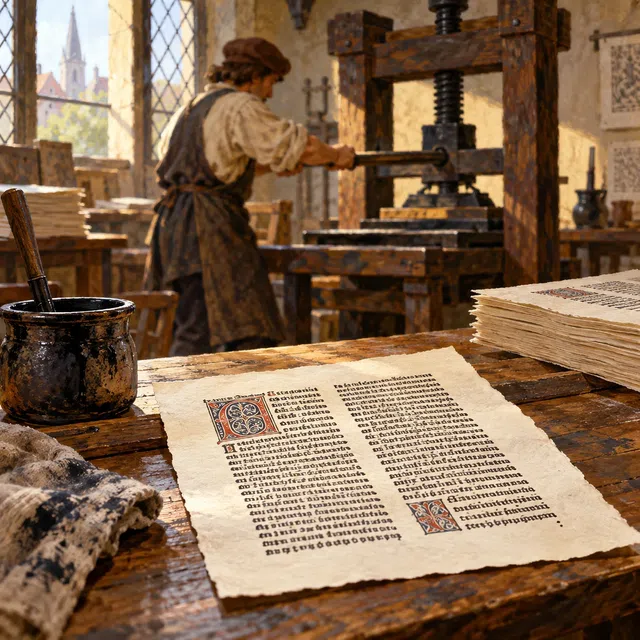
Movable types are individual printing pieces assembled into lines and pages. Once a printing job is finished, the setting can be dismantled. The individual pieces are then available for other texts, provided they remain usable. A permanently carved woodblock, by contrast, contains a particular page as a continuous printing surface. It is well suited to repeated impressions of that page, but cannot be separated into individual characters and rearranged in the same way. Gutenberg's contribution to European printing involved several technical steps working together. Reusable type alone does not explain every aspect of a printing workshop. Typesetting, suitable inking, paper, and the printing process also had to work together to produce many legible impressions from the types.