Nature and environment - Geology and natural phenomena - Volcanoes - Earth’s atmosphere - Climate

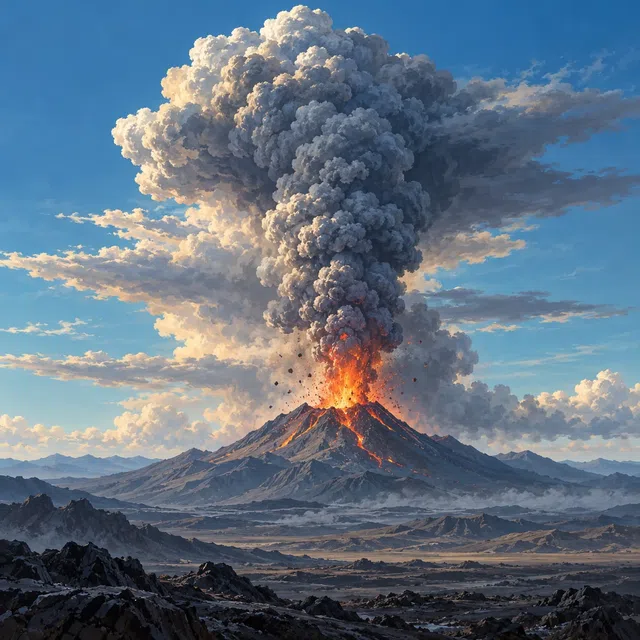
How can sulfur dioxide from a major volcanic eruption temporarily cool Earth's surface after reaching the stratosphere?

Correct!
If a large eruption carries enough sulfur dioxide into the stratosphere, chemical reactions can involve it in the formation of sulfuric-acid-containing droplets. These fine sulfate aerosols scatter some solar radiation back into space. Less solar energy therefore reaches Earth's surface. The effect can last longer than that of an ordinary ash cloud because fine aerosols can remain in this atmospheric layer relatively long. Coarse ash falls out much faster. The climate effect described therefore does not simply depend on an especially dark cloud above a volcano. Not every eruption measurably cools the global climate. Gas quantity, altitude reached, and distribution matter. The effect is also temporary. Surface cooling does not mean every atmospheric layer cools, nor does it permanently cancel other climate influences.