
History - Middle Ages - Hanseatic League

How was pan-evaporated salt produced for the Hanseatic League’s medieval trade?

Correct!
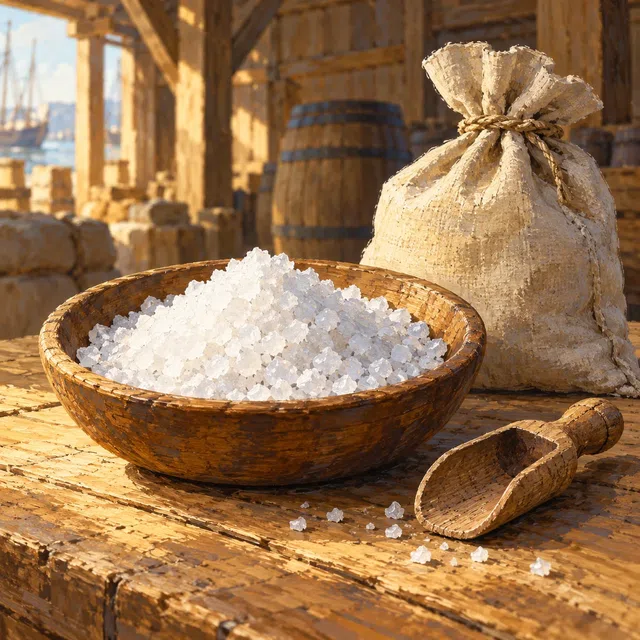
Pan-evaporated salt was produced from brine, meaning salty water. The brine was placed in shallow pans heated from below. As water evaporated, the solution became more concentrated and salt crystallized. Salt workers scooped out the crystals and allowed them to drain and dry further. Lüneburg was an important production center. There, brine was extracted and processed into salt in boiling houses. Heating required plenty of fuel, making salt production a demanding trade. The salt was sold onward along trading routes and contributed to the city’s prosperity. Not all salt is produced in the same way. Pan-evaporated salt is obtained from brine using added heat. Sea salt, by contrast, can form through natural evaporation in shallow basins, while rock salt is mined as solid rock. The distinction here is the production process, rather than a special chemical type of salt.