Dinosaurs & Prehistory - Prehistoric marine predators - Mosasaurus - Marine reptiles - Cretaceous - Prehistoric marine life
In addition to its regular jaw teeth, where else did Mosasaurus have teeth?

Correct!
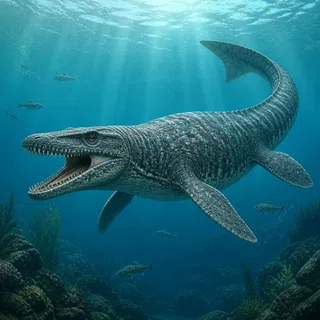
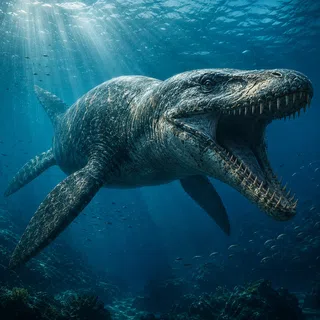
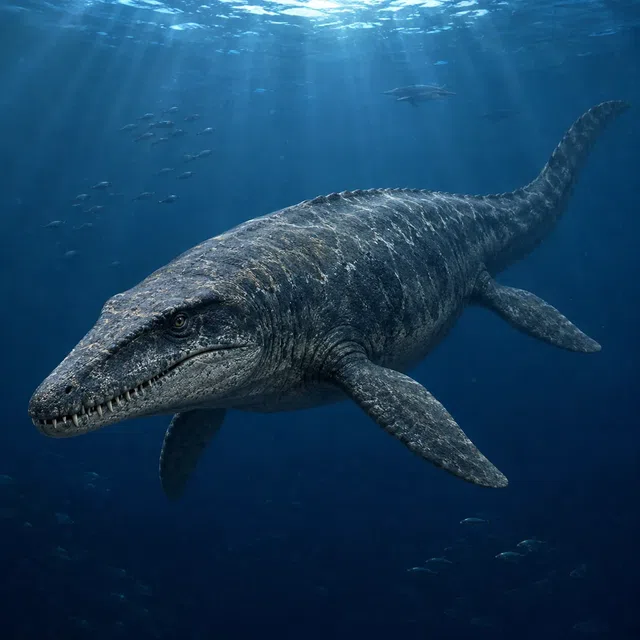
Mosasaurus was a giant marine reptile of the Late Cretaceous. In addition to the conspicuous teeth in its upper and lower jaws, it had another set: additional teeth grew on the pterygoid bones of the palate. Mosasaurus fossils held by the Natural History Museum directly confirm the presence of these pterygoid teeth. These additional teeth probably helped it hold slippery prey and move it farther toward the throat. A broadly similar arrangement of palatal teeth still occurs in some snakes today. Mosasaurs were not dinosaurs. They were squamates, members of the same large reptile group as lizards and snakes. Their exact position within that group remains under investigation. Toward the end of the Cretaceous, mosasaurs became some of the oceans' most important large predators.
Mosasaurus had additional teeth on the pterygoid bones of its palate, which helped it retain prey.