Dinosaurs & Prehistory - Dinosaurs - Megaraptor - Megaraptorans - Dinosaur anatomy - Theropods
On what part of the body was Megaraptor's huge sickle claw actually located?

Correct!
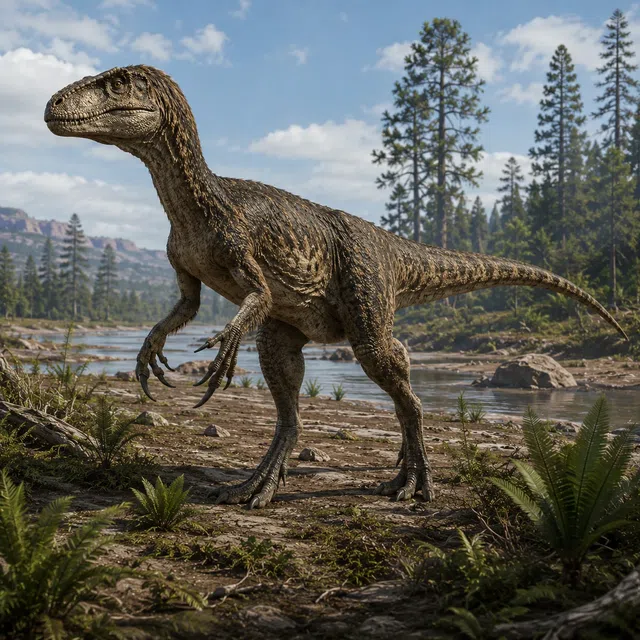
When Megaraptor namunhuaiquii was first described, what particularly caused a stir was a huge, curved claw. Originally it was interpreted as the claw of the second toe on the foot. This temporarily created the image of a huge, dromaeosaur-like predator with an enormous sickle claw on its foot. A specimen discovered later fundamentally changed this idea. It contained a nearly complete hand, with this very giant claw clearly attached to the first finger. The description published in 2004 therefore corrected the original assignment: Megaraptor's most spectacular weapon was on the hand and not on the foot. The first hand claw was huge. The preserved bony core reached approximately 35 centimeters along its curvature; During life, a keratin sheath was added, so that the visible claw was probably even longer. Megaraptor also had a second large hand claw, while the third was much smaller. Recent biomechanical studies also show that megaraptors had unusually strong forelimbs. The large arms and claws are likely to have played an important role in manipulating and probably also in grabbing prey. The exact evolutionary position of the megaraptors, however, remains the subject of scientific debate. New fossils have changed our view of these large Cretaceous predatory dinosaurs several times.
Megaraptor's famous sickle claw was not on the foot, but on the first finger of the hand.