History - Middle Ages - Hanseatic League - Seafaring and Maritime History

What happened when goods were transshipped between seagoing and inland navigation in Hanseatic trade?

Correct!
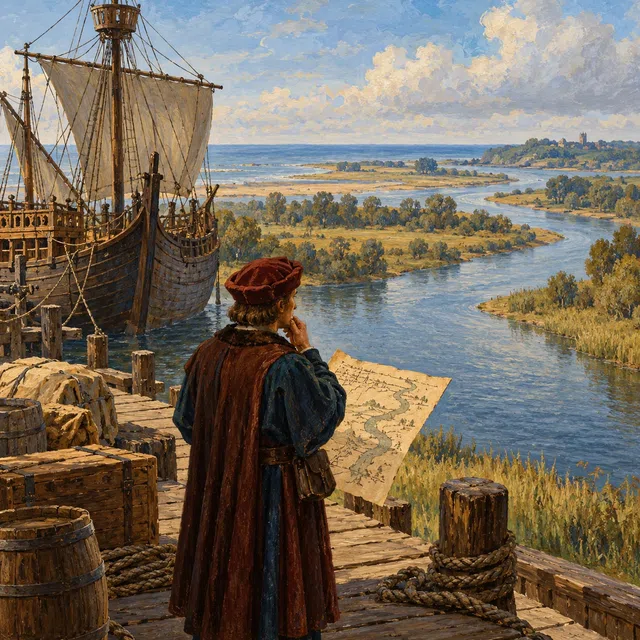
Goods could be transferred from a seagoing ship to smaller vessels suitable for continuing along rivers and lakes. A trading journey could thus be made up of several different transport stages. The University of Zurich describes this procedure for the journey of Low German merchants to Novgorod. After crossing the Baltic Sea, the goods were transferred at the mouth of the Neva to smaller ships for inland navigation. The same size of ship was therefore not suited to every stage of the route. Such a change required additional work and organization. Cargo had to be unloaded, taken over, and transported onward. Trading routes were therefore more than lines between two cities: they could involve transfers between different vehicles and transport routes.