Dinosaurs & Prehistory - Other prehistoric animals - Castoroides - Prehistoric life - Mammals - Pleistocene
Which activity typical of today's beavers is not documented for Castoroides?

Correct!
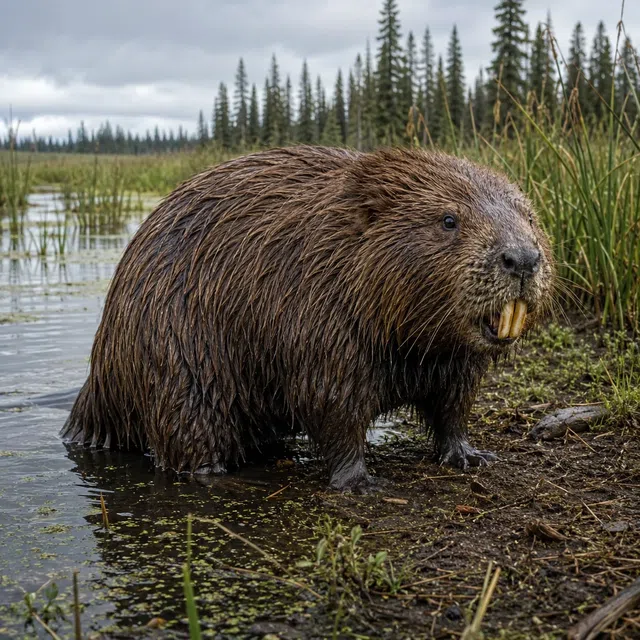
Castoroides ohioensis was a giant extinct beaver from the Pleistocene of North America. It could grow to about the size of a small bear and lived close to lakes, rivers and other wetlands. Felled trees, dams and beaver castles are typical for modern beavers. However, exactly this behavior has not yet been convincingly proven in Castoroides. Its incisors were significantly different from those of today's beavers and were not suited to felling wood in the same way. Isotope analyzes also show that Castoroides primarily ate submerged aquatic plants. So the giant beaver was closely tied to wetlands, but was not simply a scaled-up version of a modern-day dam-building beaver.
Dam construction is not documented for Castoroides; Evidence points more towards life in wetlands with food from aquatic plants.