
Dinosaurs & Prehistory - Other prehistoric animals - Argentavis - Birds - Miocene

How did the giant Argentavis probably stay mostly in the air?

Correct!
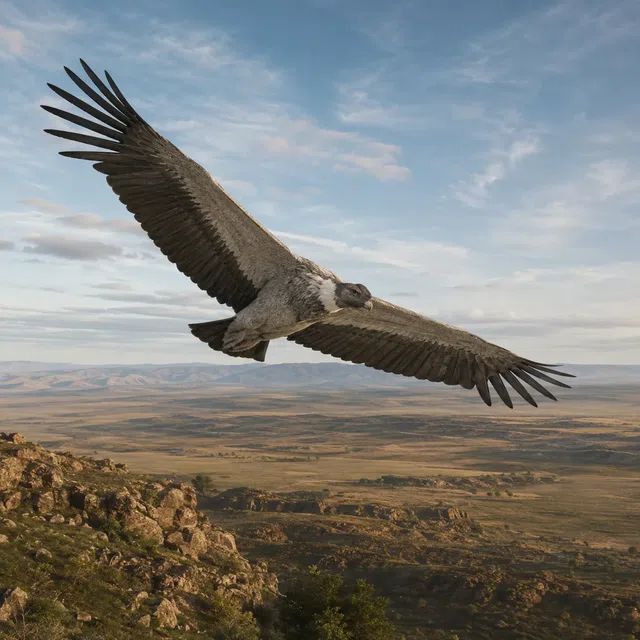
Argentavis magnificens was one of the largest known flying birds in Earth's history. It lived around six million years ago in what is now Argentina and is often described as having a wingspan of around 6 to 8 meters and a body weight of around 70 to 80 kilograms. For such a heavy bird, sustained strong wing flapping would have been energetically problematic. Instead, flight models show that Argentavis probably predominantly sailed, similar to today's large vultures. It was able to use rising warm air to gain altitude without having to constantly flap its wings. Upslope winds on mountains could also be important. This explains how such a large bird could stay in the air for long distances, even though active flapping flight would have been very difficult with this body mass.
Argentavis was probably a highly specialized glider pilot and primarily used rising air instead of constantly flapping his wings.