Animals - Insects - Animal anatomy

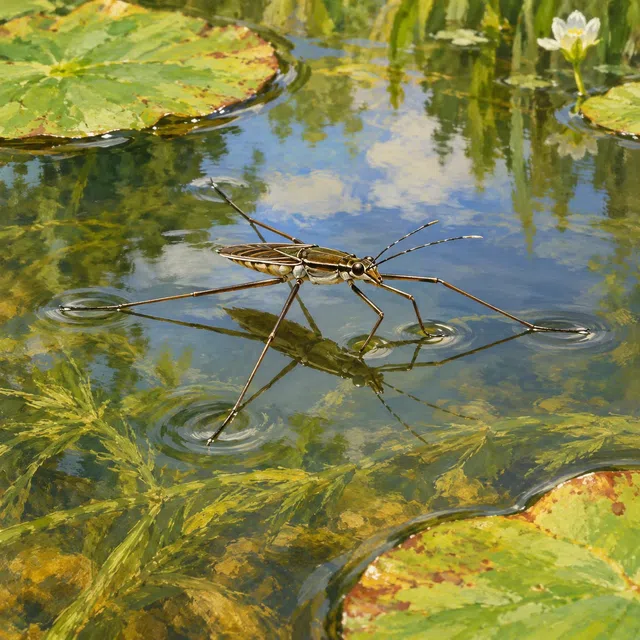
Which adaptation of their legs helps water striders avoid getting wet while standing on water?

Correct!
A water strider uses the surface tension of water. Its legs press slight dimples into the surface without normally breaking through it while standing. Together with the special structure of its legs, this allows it to stay on the water surface. The legs bear extremely fine water-repellent hairs. These resist wetting and spread the load over the contact areas. Water striders are therefore not standing on a solid skin; support results from properties of the liquid surface and the animal’s adaptations. The pairs of legs also have different roles in catching prey, propulsion, and steering. Surface tension is the crucial property of water here, but it is not sufficient on its own. This question focuses on the adaptation of the legs. Without the appropriate body structure, not just any insect could use the same effect.