History - Inventions and discoveries - Elevators - Elevator safety - United States - History of inventions

Which American inventor developed the safety safety device that was intended to protect elevators from falling if the rope broke?

Correct!
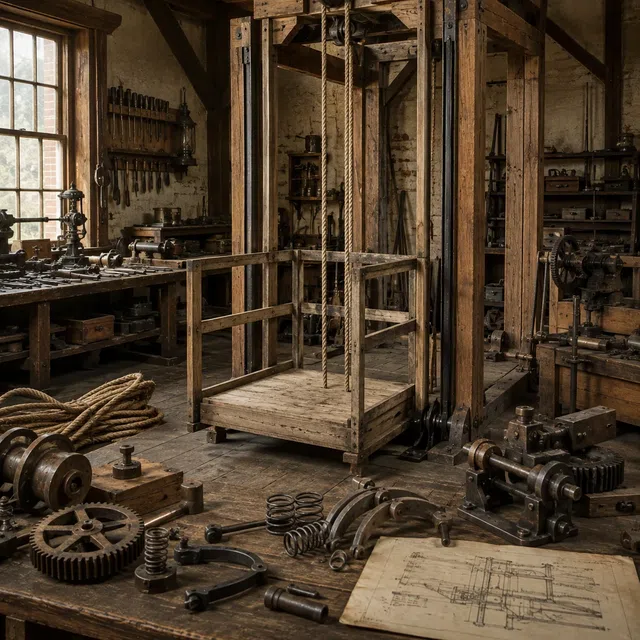
Elisha Graves Otis revolutionized elevator technology in the 1850s with an automatic safety device. If the supporting rope breaks, the platform should not fall down without braking, but should be stopped by the catching mechanism. This development made elevators much safer and encouraged their later use to transport people. In 1853, Elisha Graves Otis sold his first safety elevator. His spectacular demonstration at the Crystal Palace Exhibition in New York in 1854 became particularly famous. Elisha Graves Otis stood on a raised platform and had the supporting rope cut. The platform fell only a short distance before its safety device stopped it. In 1857, his company installed Otis' first passenger elevator in the E. V. Haughwout Building in New York City. Reliable elevator technology later became an essential prerequisite for ever taller buildings and thus for the development of modern cities. What is important is that Elisha Graves Otis did not invent the elevator itself. Devices for vertical transport had existed long before. His crucial invention was the safety safety device, which made passenger elevators much more practical.
Elisha Graves Otis developed the safety safety device that was intended to stop elevators in the event of a rope break.