History - Inventions and discoveries - Matches - Fire-making - United Kingdom - History of inventions
Which British chemist invented the first successful friction match in 1826?

Correct!
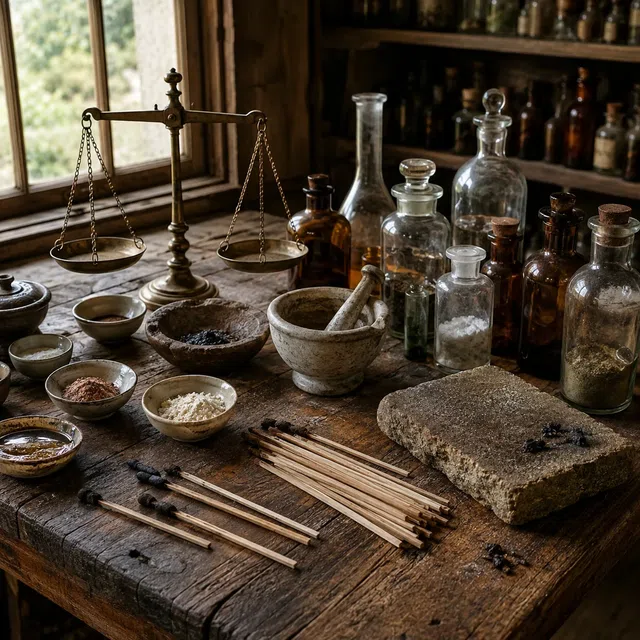
The English pharmacist and chemist John Walker experimented with various chemical mixtures in his shop in Stockton-on-Tees. He used a wood chip to stir a mixture of, among other things, antimony sulfide and potassium chlorate. After the substance dried on the wood, Walker ran the chip over a rough surface - and the mixture ignited. Walker recognized the potential of his accidental discovery and developed small wooden sticks whose chemically coated tips could be ignited by friction. The Science Museum dates its first successful friction matches to 1826. From April 1827, John Walker began selling his so-called “friction lights”. His surviving account book contains numerous entries about the sales of these early matches. Interestingly, Walker did not patent his invention. The famous scientist Michael Faraday is said to have even encouraged him to do so, but Walker refrained from doing so. Other manufacturers took up the idea and developed it further. Before Walker, there were already sulfur-treated matches, including in China. However, these could not ignite through friction alone, but required an existing flame. Therefore, Walker is considered the inventor of the successful modern friction match.
John Walker invented the first successful friction match in 1826.