History - Inventions and discoveries - Bicycles - Human-powered transport - Germany - History of inventions
Which German inventor developed the running machine in 1817, a crucial precursor to the modern bicycle?

Correct!
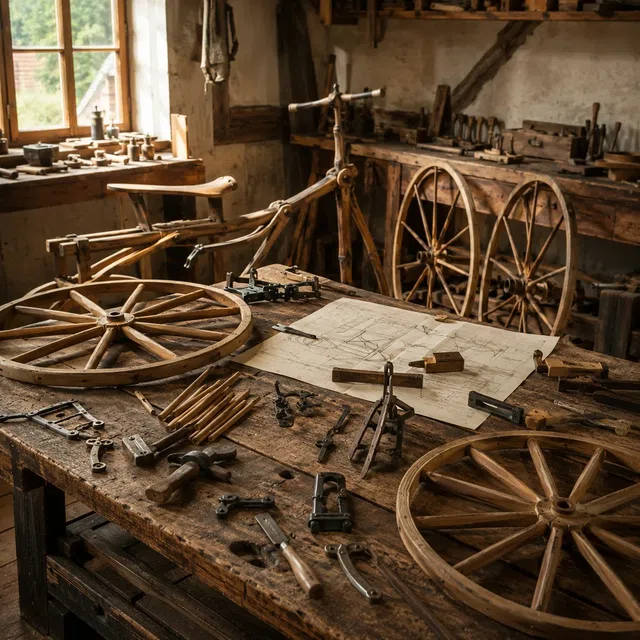
In 1817, Karl Friedrich Christian Ludwig Freiherr Drais von Sauerbronn developed a two-wheeled vehicle made of wood in Baden, which he called the “running machine”. The rider sat on a saddle and pushed himself off the ground with his feet. Pedals, chains and pneumatic tires didn't exist yet. The decisive advance over older two-wheeled designs was the steerable front wheel. As a result, the basic geometry of the running machine was surprisingly similar to today's bicycle. Drais received a privilege for his invention in 1818. The running machine became known internationally under names such as Draisine, Draisienne or velocipede. However, the vehicle did not yet have pedals. It was only decades later that various designs with pedal drives were developed. The modern bicycle ultimately emerged from these developments. That's why the Smithsonian specifically describes the trolley as a precursor to the modern bicycle.
Karl Friedrich Christian Ludwig Baron Drais von Sauerbronn developed the running machine in 1817, a crucial forerunner of the modern bicycle.