Dinosaurs & Prehistory - Other prehistoric animals - Paraceratherium - Rhinocerotoids - Oligocene - Extinct animals
Which characteristic of today's rhinos was missing from Paraceratherium?

Correct!
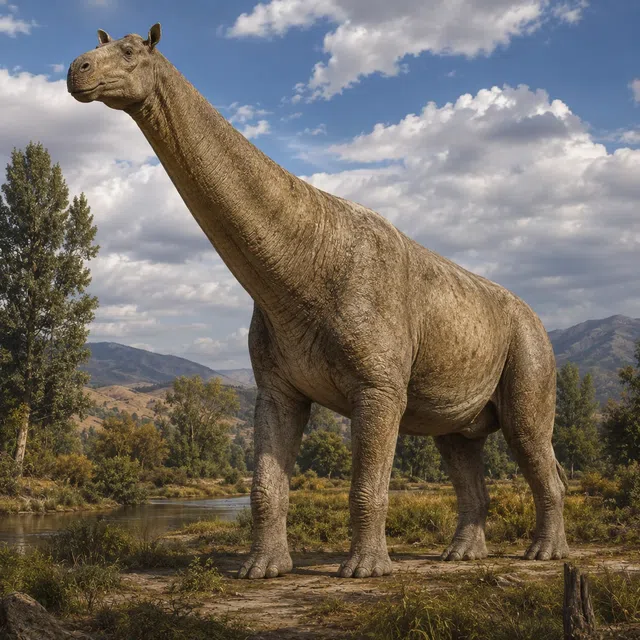
Paraceratherium was a gigantic, hornless relative of the rhinoceros. It belonged to an extinct lineage of the Rhinocerotoidea and lived in Eurasia during the Oligocene. Fossils are known from China and Pakistan, among others. Although the animal hardly looked like a modern rhinoceros at first glance with its long neck and high legs, its anatomy clearly shows that it belongs to the rhinoceros family. However, the characteristic rhino horn was completely missing. Paraceratherium was one of the largest land mammals in Earth's history. The American Museum of Natural History even describes it as the largest known land mammal and shows a life-size reconstruction measuring around 4.6 meters high. However, due to the fragmentary fossil material, the exact size and weight estimates vary considerably. A Paraceratherium from China described in 2021 also confirms how widespread these giant rhinoceros relatives were. The animals were herbivores and could reach vegetation at considerable heights using their long necks.
Paraceratherium was a giant hornless rhinoceros relative; It lacked the horn typical of today's rhinos.