Art - Architecture - Great Wall of China - China

Which functions did many hollow towers of the Great Wall of China combine during the Ming period?

Correct!
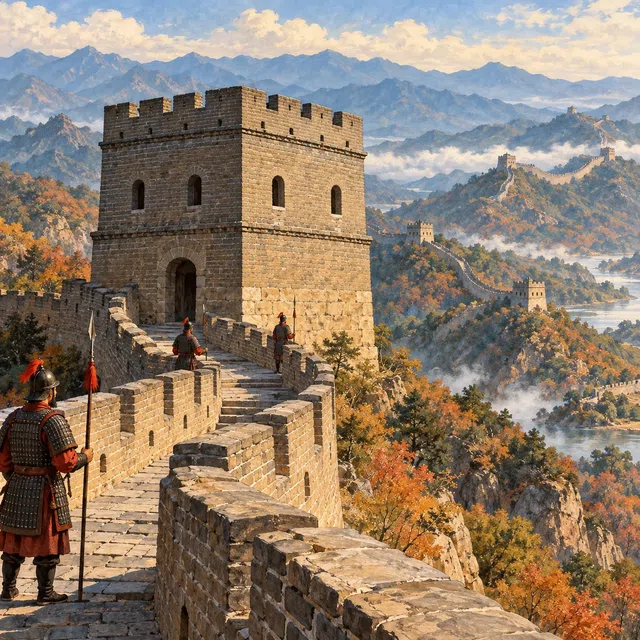
Many hollow towers combined observation and defense with accommodation and storage. Their interiors provided space for the garrison as well as weapons, food, water, and other necessities. Upper platforms and openings served surveillance and military operations. A hollow tower was therefore more than an elevated lookout point. Its usable interior made it a stronghold within the defensive system. However, size, number of stories, and internal layout varied. Such a tower should not automatically be equated with every kind of beacon tower, either. The other functions listed are governmental, technical, or ritual, but do not match this combination of military duties. The answer image shows an educational interior view with separate uses. It does not reproduce any particular tower completely or to scale.