Animals - Animal types and traits - Oceans - Annelids

Which of these organ systems is absent in adult giant tubeworms (Riftia pachyptila) from the deep sea?

Correct!
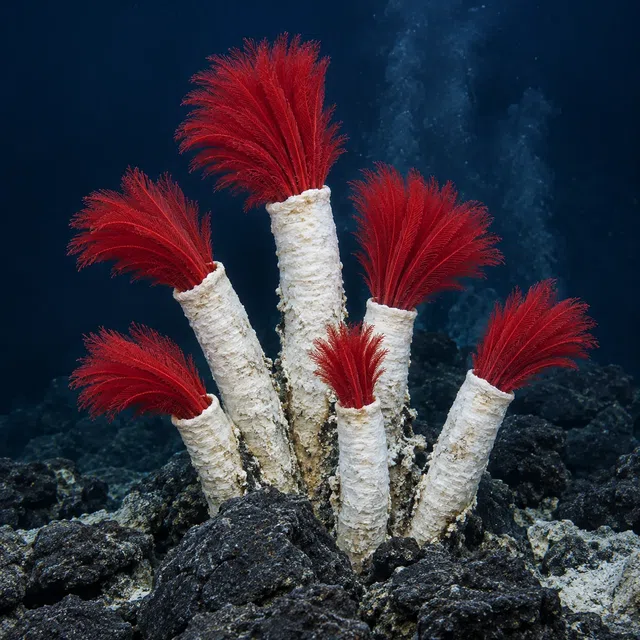
Adult giant tubeworms of the species Riftia pachyptila lack a digestive tract with a mouth and gut. They must therefore obtain organic food in another way. Bacteria living inside the worm perform this task. The bacteria occupy a specialized organ called the trophosome. They obtain energy from chemical reactions, especially the oxidation of hydrogen sulfide. With this energy, they can build organic substances from inorganic carbon, providing food for the worm. This form of organic food production is called chemosynthesis. The conspicuous red branchial plume extends from the protective tube and exchanges substances with the water. The circulatory system connects this surface with the interior of the body and the bacteria-rich organ. Both partners benefit: the bacteria receive a protected habitat and supplies, while the worm receives food. The white tube is an outer protective covering. The animal's soft body sits inside it, and the worm can withdraw its red plume when threatened. The absence of a digestive tract is a feature of the adult worm, not a sign of a nonliving or plant organism.