Nature and environment - Geology and natural phenomena - Volcanoes - Geology

Why can heavy rain at a volcano trigger a lahar even after an eruption has ended?

Correct!
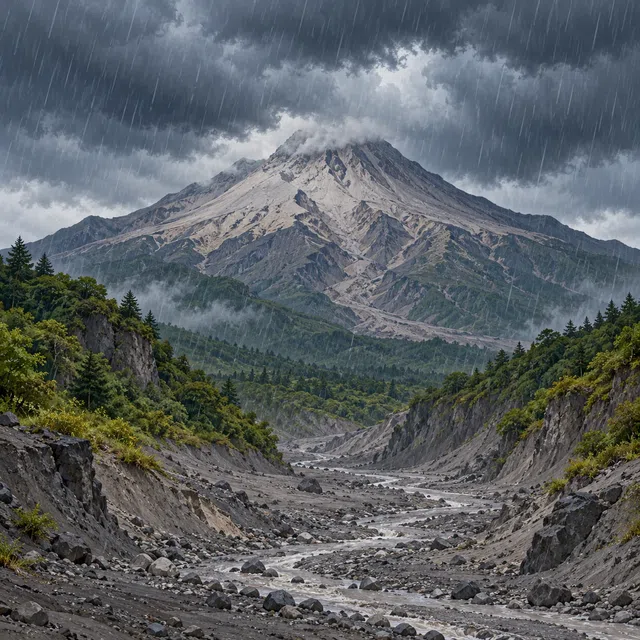
A lahar is a flow of water and volcanic rock material. Heavy or prolonged rain can mobilize loose ash and rubble on slopes. The mixture then moves downhill as a dense mud-and-debris flow, often entering river valleys. No new lava needs to be emerging for this to happen. An eruption can leave large amounts of loose material that are remobilized later. Lahars can therefore occur long after an eruption and pick up more material as they move. Other triggers include rapidly melting snow, lake outbursts, and water-rich landslides. Their shared feature is the water-carried mixture. A lahar is therefore different from a dry pyroclastic flow of hot gases and fragments.