Nature and environment - Geology and natural phenomena - Volcanoes - Rocks

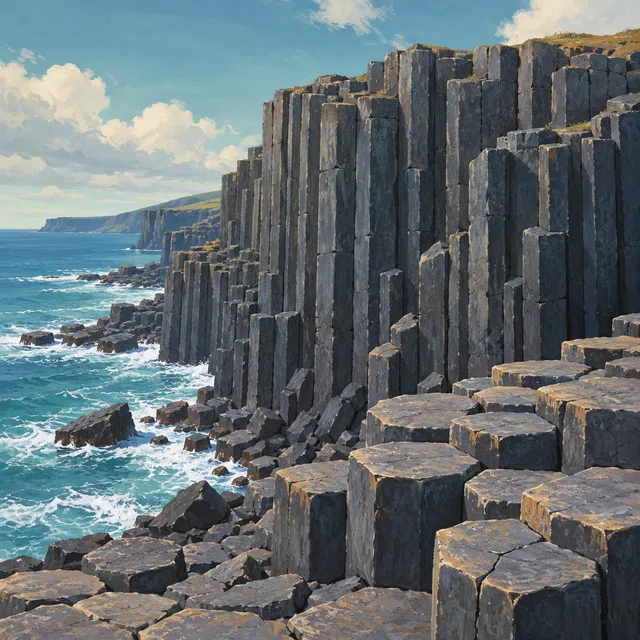
Why can polygonal basalt columns form as a lava flow cools?

Correct!
Basalt columns form through cooling cracks. The rock is already solid but still hot. As it continues to cool and shrink, stresses build up. Cracks divide the rock mass into elongated, polygonal sections. The columns often have an approximately hexagonal cross section, but other numbers of sides occur too. Cracks propagate inward from cooling surfaces. Columns therefore lie roughly perpendicular to the surfaces through which particularly large amounts of heat were lost. A column is not one enormous crystal, nor was it chiseled out of the rock. Comparable columnar jointing can also occur in other igneous rocks and volcanic deposits. Basalt is a particularly familiar example, but it is not essential to every such structure.