History - Middle Ages - Hanseatic League

Why was beeswax broken open for inspection in the Hanseatic League’s medieval trade?

Correct!
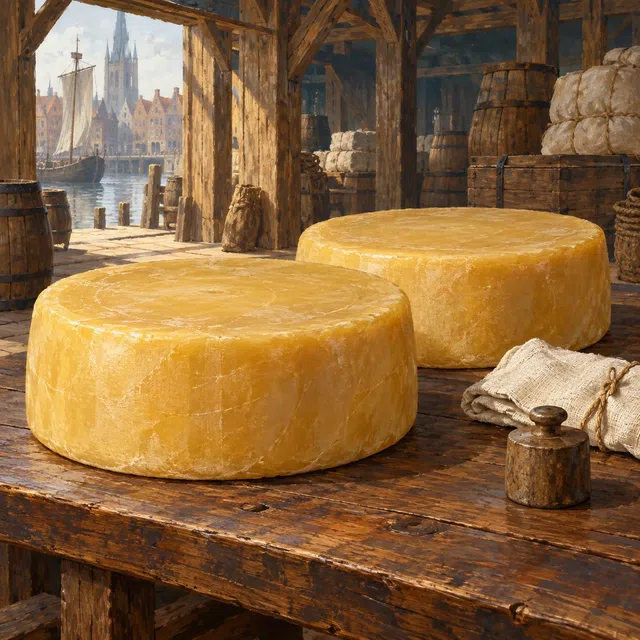
Breaking off a piece allowed an inspector to examine the inside of a wax block. Unwanted adulterants such as fat, stones, or tar could be hidden there. An unremarkable surface alone therefore did not prove that the whole block consisted of pure beeswax. The European Hansemuseum describes such an inspection at the Novgorod kontor: a specially elected alderman supervised trade and checked incoming goods. Particularly good wax could receive a quality seal, allowing it to fetch higher prices on western markets. Beeswax was an important commodity in Hanseatic trade. Churches in particular needed it for candles; it was also used for seals and wax tablets. Buyers therefore cared about the purity of the material supplied, as well as its quantity.