Dinosaurs & Prehistory - Dinosaurs - Deinocheirus - Cretaceous
What food was directly detected in the fossil stomach contents of Deinocheirus?

Correct!
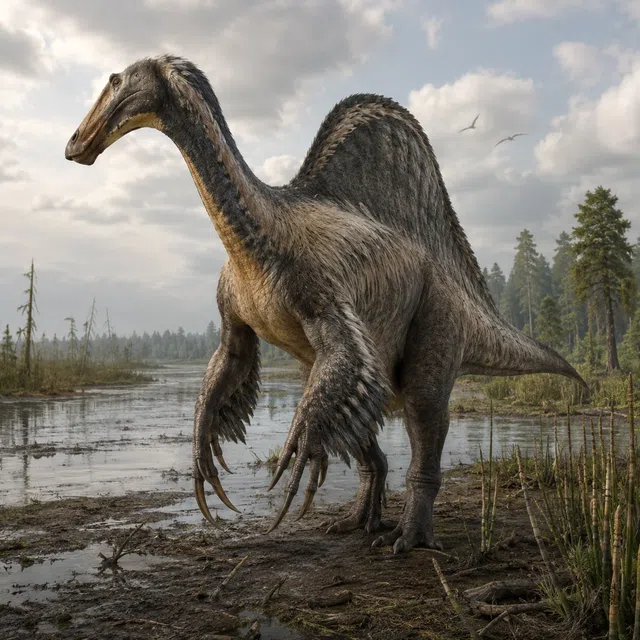
Deinocheirus mirificus was one of the most unusual dinosaurs of the Late Cretaceous. For almost 50 years, it was known primarily for its gigantic, 2.4 meter long forelimbs. Only almost complete skeletons revealed a huge ornithomimosaur with a broad, beak-like skull and a noticeably high back. The contents of its stomach were particularly surprising: fish remains and more than 1,000 gastroliths – swallowed stomach stones – were found in one specimen. This, along with the anatomy of the skull and beak, suggests that Deinocheirus was an omnivore, eating both plants and animal foods. This means that, despite its huge arms and claws, Deinocheirus was probably not a specialized big game hunter. Rather, the researchers are reconstructing an animal that often searched for food in moist habitats. The huge forearms could have helped, among other things, with collecting or growing plants.
Fish remains and more than 1,000 gastroliths were found in the stomach contents of a Deinocheirus. Combined with its body type, this suggests an omnivorous diet.