Dinosaurs & Prehistory - Dinosaurs - Kentrosaurus - Stegosaurus - Jurassic
What feature particularly distinguished Kentrosaurus from the better-known Stegosaurus?

Correct!
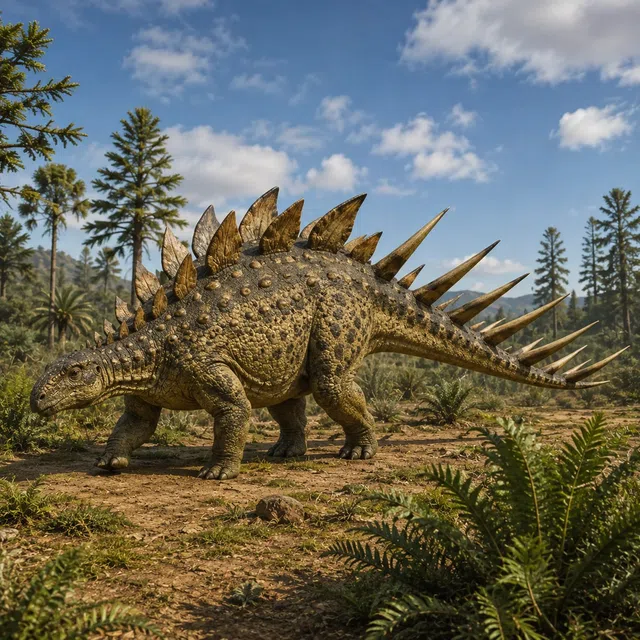
Like Stegosaurus, Kentrosaurus aethiopicus belonged to the stegosaurs. While there were smaller bony plates along the front back, they merged into increasingly longer spines towards the back. The tail in particular was therefore strongly armed. However, the exact position of individual plates and spines cannot be reliably reconstructed in every detail. This tail armament was probably not just for show. Biomechanical studies come to the conclusion that Kentrosaurus was able to use its mobile, long-spiked tail as an effective defensive weapon and was able to seriously injure even large predatory dinosaurs. At about 5 meters long, Kentrosaurus was significantly smaller than its famous North American relative Stegosaurus. It lived about 155 to 150 million years ago in the Late Jurassic and its fossils come from what is now Tanzania. The name Kentrosaurus appropriately means “spiny lizard” or “spiky lizard”.
In Kentrosaurus, the smaller plates of the front back merged into particularly long spines towards the back. Modeling suggests that the tail could serve as a defensive weapon.