Home and Crafts - Furniture and Interior Styles - Furniture - Design history

Which 18th-century interior style is especially associated with asymmetrical shell ornaments and playful curves?

Correct!
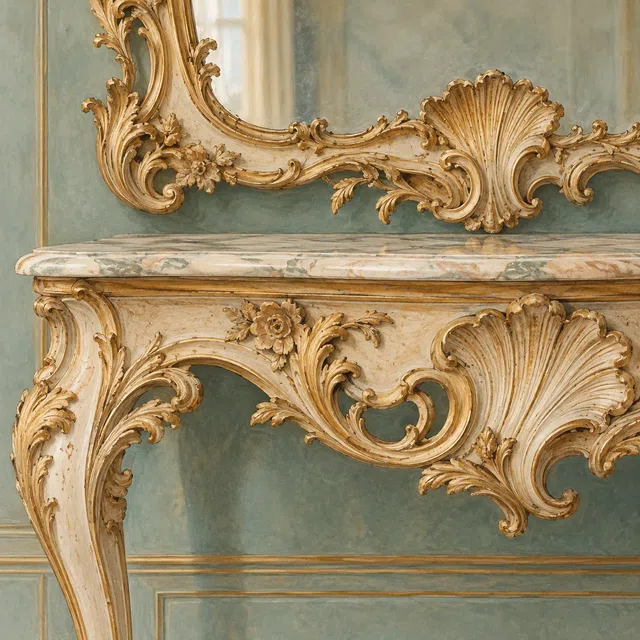
The style is Rococo. Its characteristic features include flowing lines, asymmetrical ornaments, and motifs drawn from nature. Shell-like forms, often called rocaille, appear on furniture, wall decorations, and mirror frames. The style developed in the early 18th century and shaped many sophisticated interiors. Furniture and room decoration were often designed as a coordinated ensemble. The result could look light and fluid, even though making it required extremely elaborate craftsmanship. Rococo does not mean that every object has a completely asymmetrical structure. Often the basic construction remains orderly, while individual decorations seem deliberately to dance off balance. This lively ornamentation distinguishes the style from more restrained Neoclassical designs.