Home and Crafts - Furniture and Interior Styles - Furniture - Design history

Which late-18th-century furniture style drew on ancient models, using straight, tapering legs and orderly decoration?

Correct!
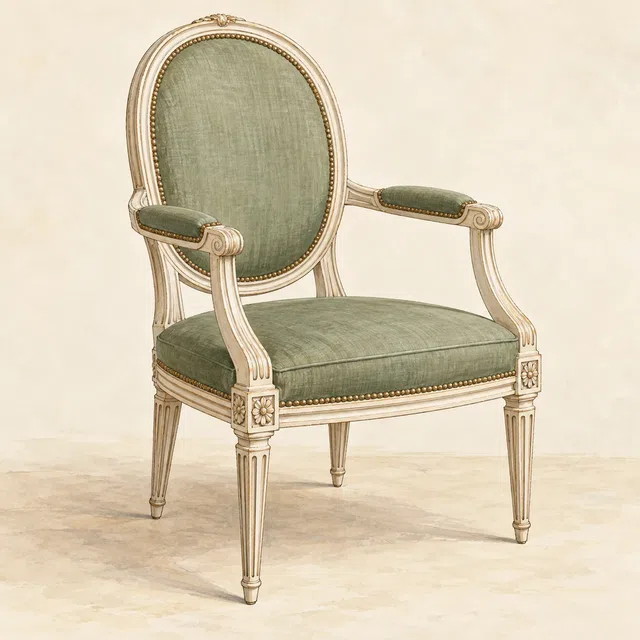
These features belong to Neoclassicism. Designers took inspiration from the art and architecture of antiquity and adapted its visual language to interiors and furniture. Straight lines, clear divisions, and motifs such as small columns, acanthus leaves, and antique-inspired friezes could reinforce this effect. Archaeological discoveries and educational journeys helped increase interest in ancient forms. Furniture makers did not simply copy ancient furnishings, however: new chairs and writing furniture were designed for contemporary needs. A straight chair leg alone is insufficient to date a piece of furniture reliably. It becomes meaningful alongside proportions, ornament, construction, and provenance. The illustration shows an idealized combination of these Neoclassical features.