History - Inventions and discoveries - Vacuum cleaners - Home appliances - United Kingdom - History of inventions

Which British engineer developed the first motorized vacuum cleaner in 1901?

Correct!
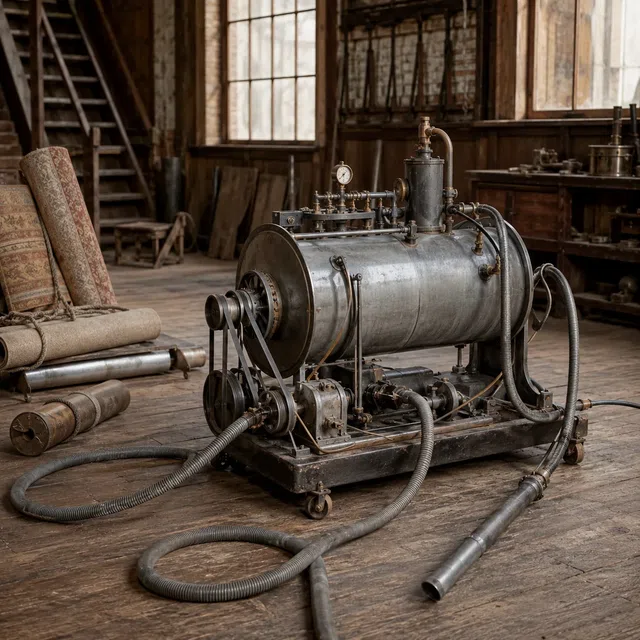
In 1901, Hubert Cecil Booth came up with the crucial idea of not blowing away dirt with compressed air, but rather sucking it in using negative pressure. Previously he had seen an American machine blowing dust from railway carriages. Booth realized that the principle could make much more sense the other way around. However, his first vacuum cleaners had little in common with today's household appliances: they were huge, petrol-powered and some were mounted on horse-drawn carts. The machine was parked in front of a building and long hoses were led into the rooms through windows. Booth founded the British Vacuum Cleaner Company in 1901 after his design was patented. His machine was nicknamed “Puffing Billy.” Later, the American James Murray Spangler developed a much smaller electric vacuum cleaner for the home. He sold his idea in 1908 to William Henry Hoover, whose name eventually became synonymous with vacuuming in several languages. The Science Museum describes Booth's machine as a working early system, the suction principle of which still forms the basis of most vacuum cleaners today.
Hubert Cecil Booth developed the first motor-driven vacuum cleaner with a suction principle in 1901.