Art - Architecture - Great Wall of China - China

Which combination describes the familiar basic principle of visual warning signals at the Great Wall of China?

Correct!
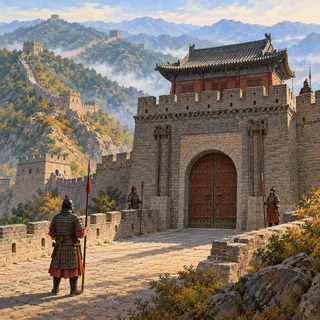
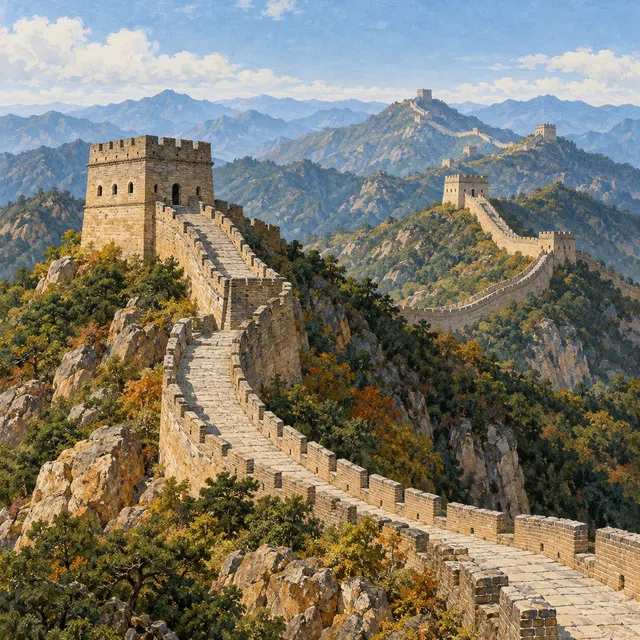
The familiar basic principle is smoke by day and fire at night. Light or dark smoke can be seen in daylight, while flames stand out clearly in darkness. Guards could relay warnings from one elevated position to the next. This was not a timeless code that was identical everywhere. Rules, signal types, and combinations changed according to the period and section. Other means, such as flags, lanterns, drums, or gunshots, could also play a role. A warning chain also worked only if the stations were staffed, had a line of sight to one another, and the signals were understood. The answer therefore describes a basic principle rather than a complete communication system for the wall's entire construction history. The image focuses on controlled signals on towers; the structures themselves are not burning. No arbitrary precise transmission time is claimed.