Cars and mobility - Vehicles and brands - Locomotives - Railroad technology
Which energy conversion chain describes how a diesel-electric locomotive is powered?

Correct!
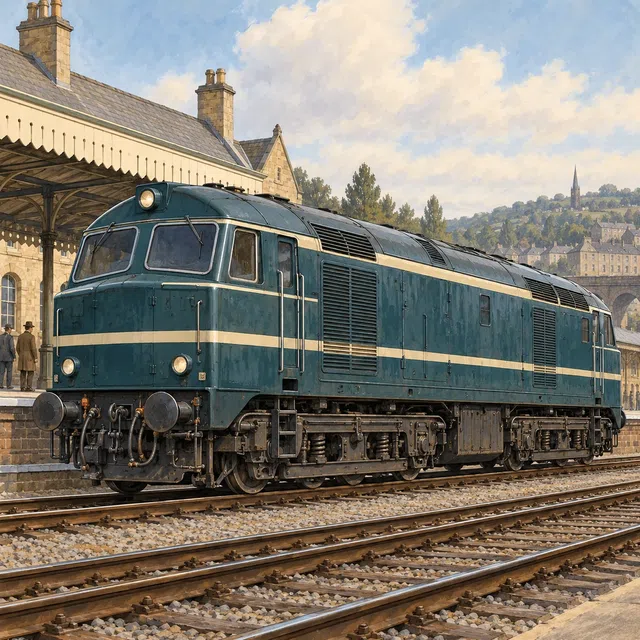
In a diesel-electric locomotive, the diesel engine drives a generator. The electrical energy produced supplies traction motors, which transmit their force to the wheelsets. The diesel engine therefore does not drive the wheels through a conventional mechanical gearbox. This separation makes it possible to provide high tractive effort at low speeds. The engine and wheelsets do not have to be linked by a fixed rotational-speed ratio. Power is transmitted through electric machines and their associated control system. Diesel-electric propulsion is different from receiving power through overhead wires. In this case, the electrical energy is generated on board. Diesel-mechanical and diesel-hydraulic systems also exist, using other transmission methods. The word diesel alone therefore does not describe a locomotive’s entire propulsion system.