
History - Middle Ages - Hanseatic League - Ships

Why was the cog well suited to the Hanseatic League’s long-distance trade?

Correct!
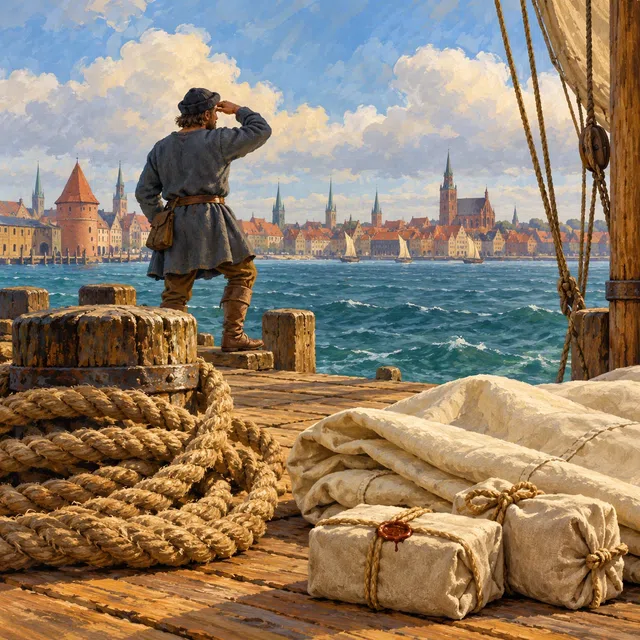
The cog offered plenty of space for trade goods and needed a comparatively small crew. This made it possible to transport a large cargo with manageable staffing needs. For merchants, that was an important economic advantage on North Sea and Baltic Sea trading routes. A broad, high-sided hull was typical. The cog was a sailing cargo ship with one mast and a large square sail. It was a vessel for substantial cargoes, rather than an especially narrow rowing ship. Its voyages still depended on wind and weather. Cogs were not all the same size, nor were they the only ships used in Hanseatic trade. Different vessels were used depending on the period and route. Nevertheless, the cog became a particularly well-known symbol of this maritime trade.
Source: DIE HANSE: The Cog