Animals - Animal types and traits - Oceans - Cephalopods

A study published in 2014 describes a female deep-sea octopus guarding her eggs. How long did this documented brooding period last?

Correct!
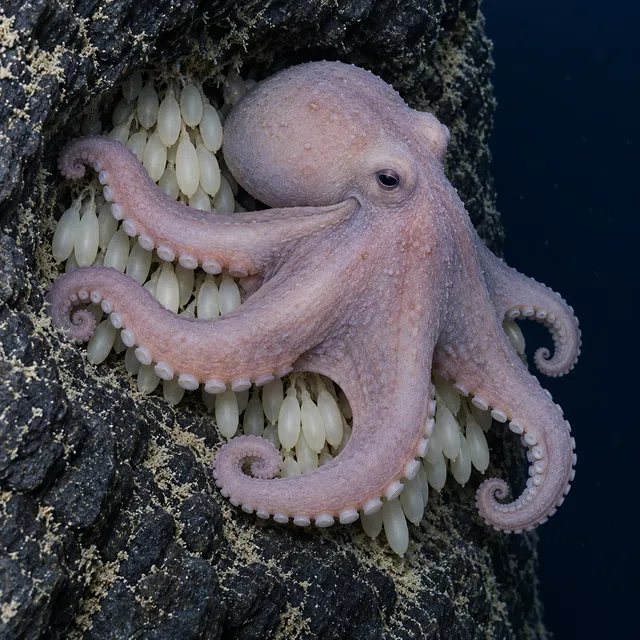
The research team measured the observed brooding period at 53 months, or almost four and a half years. They repeatedly visited the female at the same rock face with a remotely operated underwater vehicle. Distinctive scars and the continuous growth of the eggs helped them recognize the same animal and the same clutch. The mother protected the egg capsules attached to the rock. During observations, she remained over the clutch; no feeding was observed. However, this was not continuous monitoring throughout the entire period. Embryonic development can proceed slowly in cold deep water. The long period inside the egg fits a strategy in which young hatch at an advanced stage of development. The small octopuses were already visible inside the capsules before hatching. On a later visit, the female was gone and empty egg cases remained on the rock. The exact duration is a documented individual case, not a universal timetable for every deep-sea octopus. It also concerns guarding eggs that had already been laid, rather than pregnancy inside the mother's body.