Dinosaurs & Prehistory - Dinosaurs - Diplodocus - Sauropods - Dinosaur anatomy - Jurassic
Based on current research, how did Diplodocus probably hold its long tail?

Correct!
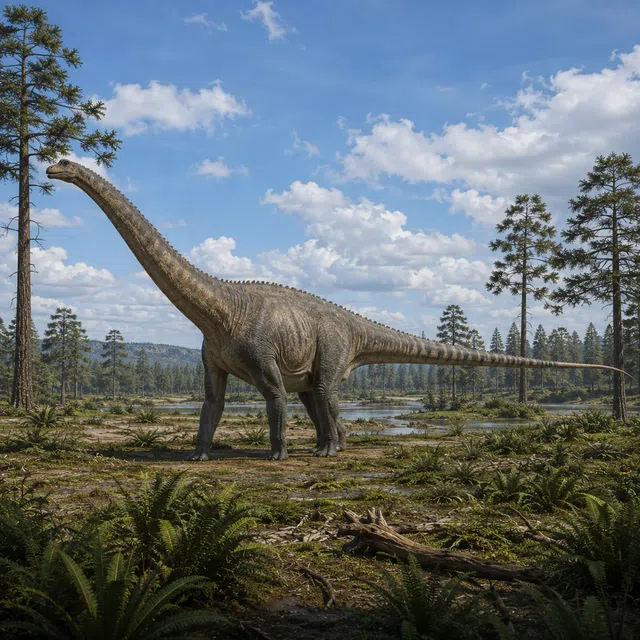
Older depictions often showed Diplodocus with a heavy tail dragging along the ground behind the animal. This image is now considered outdated. Reconstructions of its skeletal anatomy and locomotion suggest that Diplodocus kept its long tail free above the ground. The Natural History Museum even changed the tail position of its famous Diplodocus cast “Dippy”. The tail was exceptionally long and became thinner towards the tip. In diplodocids such as Diplodocus it ended in a whip-like section. Exactly what this whip-like tail was used for is less clear. Defense, communications or other functions were discussed. Therefore, the quiz question is deliberately focused on the easily reconstructable tail position and not on a single claimed function. The name Diplodocus is also related to its tail: some caudal vertebrae have conspicuous two-part bony processes, to which the name “double beam” refers.
Diplodocus is no longer reconstructed with a dragging tail; its long tail was probably kept mostly above the ground.