Dinosaurs & Prehistory - Dinosaurs - Pachyrhinosaurus - Ceratopsians - Dinosaur anatomy - Cretaceous
What striking structure did Pachyrhinosaurus have instead of a large bony nasal horn?

Correct!
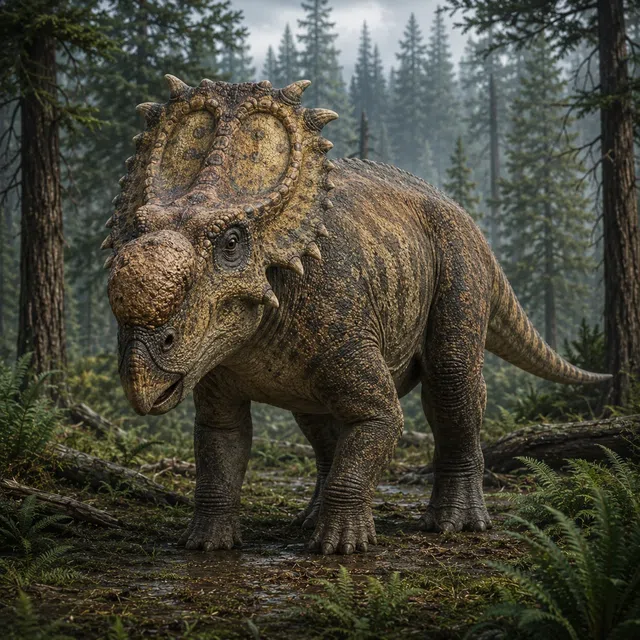
Pachyrhinosaurus belonged to the ceratopsians and was therefore related to dinosaurs such as Triceratops and Styracosaurus. While many of its relatives had a conspicuous horn on its nose, Pachyrhinosaurus had a large, rough bony ridge, or nasal boss in English. The Natural History Museum specifically emphasizes that, unlike Triceratops, Pachyrhinosaurus did not have a bony nasal horn. This structure was apparently covered by specialized tissue during life. Studies of the bone surface indicate a keratinized covering, although the exact external shape has not been preserved in fossils. Therefore, simply putting a huge keratinous rhinoceros horn on Pachyrhinosaurus would be too strong a statement - there is no complete certainty about this. Several species of Pachyrhinosaurus are known. Fossils come particularly from what is now Alberta in Canada and from Alaska and belong to the late Cretaceous period. The name Pachyrhinosaurus means “big-nosed lizard” – a pretty fitting description of its extraordinary skull.
Pachyrhinosaurus did not have a large bony nasal horn like Triceratops, but instead had a noticeable rough bony ridge on its nose.