Animals - Animal types and traits - Oceans - Corals

How do cold-water corals in dark ocean depths mainly obtain food?

Correct!
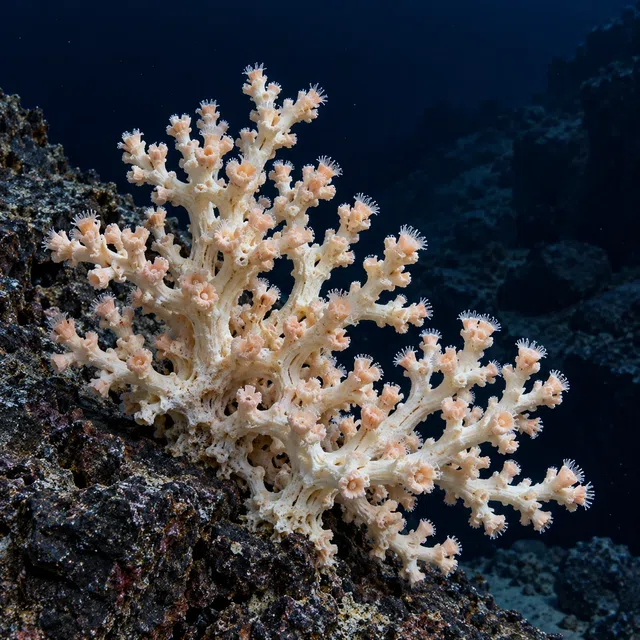
Cold-water corals in dark ocean depths catch plankton and other suspended organic particles from the water. Their polyps have tentacles that can take in food. Currents bring the small organisms and particles to the corals, which remain attached in place. A polyp is a small animal with a mouth opening surrounded by tentacles. Many corals consist of numerous such polyps forming a colony together. In stony corals, this produces a calcium carbonate skeleton. Although their branching shapes may resemble bushes or trees, corals are animals. Many familiar tropical reef corals obtain an important part of their food from algae living in their tissues. These algae need light for photosynthesis. This food supply does not work in the dark deep sea. Corals living there therefore depend on other food sources, particularly food carried to them by currents. Some of this organic food originally forms in well-lit water layers and later sinks into the depths. Corals thus need no direct sunlight at their own location, but can still be connected to life near the sea surface. Their branching structures also provide shelter and habitat for other animals.