Nature and environment - Geology and natural phenomena - Volcanoes - Geology

How does a volcanic collapse caldera typically form?

Correct!
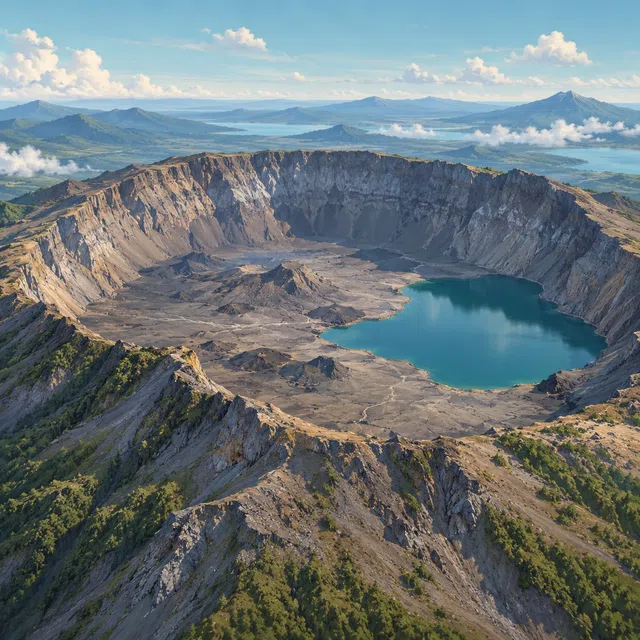
A collapse caldera forms when magma is withdrawn from an underground storage region and the overlying rock subsides or collapses. An often broad depression remains. Collapse is the decisive process, rather than simply blasting away a mountain's summit. Magma can escape during a large explosive eruption, but it can also drain away as lava or intrude sideways into other areas. Calderas are therefore not exclusively associated with enormous explosions. They also occur on shield volcanoes. A caldera can change later: new lava may fill parts of the depression, further collapses may enlarge it, and water may collect inside. However, a lake is not a requirement for a caldera. Nor does a lake alone prove that a depression has a volcanic origin.
Source: National Park Service: Calderas