Animals - Animal types and traits - Oceans - Whales

In the deep sea, worms of the genus Osedax colonize the bones of dead whales. How do adult females gain access to nutrients inside the bone?

Correct!
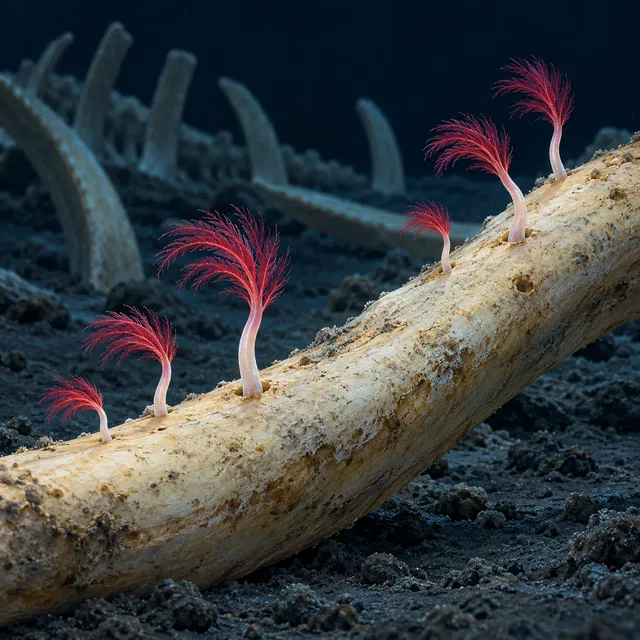
Adult female Osedax worms have neither a mouth nor a gut. They access food in bone using branching body extensions that resemble roots. This tissue releases acid that dissolves the mineral component of the bone, making organic substances such as fats and collagen accessible. Symbiotic bacteria live in the rootlike extensions. They help process the organic components of the bone and contribute to the worm’s nutrition. These structures consist of animal tissue with bacterial partners. The roots are a specialized part of the worm’s body. Above the bone surface, the most visible structures are the delicate, often reddish feathery plumes. They serve as gills, taking up oxygen from the water. The trunk connects them to the tissue hidden inside the bone. Most of the structures that allow the worm to use bone as a food source remain invisible from the outside. A whale carcass that sinks to the seafloor brings a large amount of organic material into a habitat that is often short of food. After the soft tissues have been eaten, the bones can still provide food for other organisms. Osedax are specialized members of these communities and help break down the bones.
Source: MBARI: Osedax Studies.