Nature and environment - Seas and waters - Oceans - Animal migration

Many zooplankton animals move daily between deeper and near-surface ocean layers. When does their ascent usually begin?

Correct!
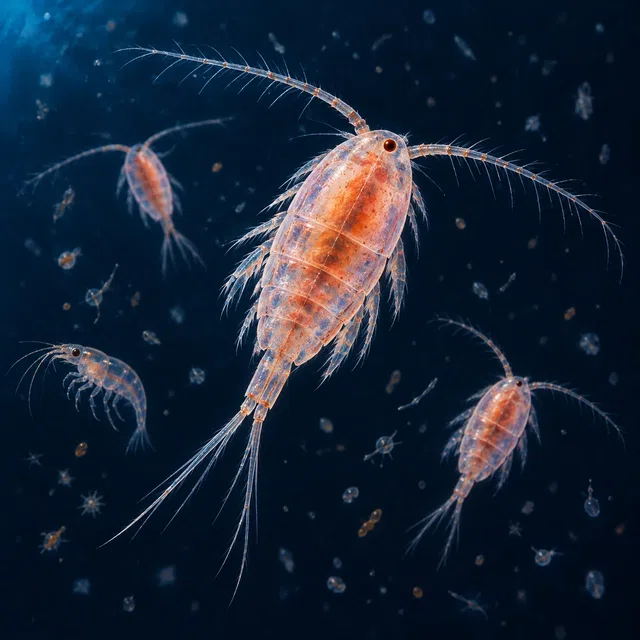
In the common pattern of daily vertical migration, many zooplankton animals rise from deeper water at dusk. They spend the night closer to the surface, where they find food. Before or around dawn, they return to greater depths. An important reason is the changing light. There is plenty of food near the surface, partly because light-dependent plankton grows there. During the day, however, predators that hunt by sight can detect small animals more easily. In darkness, feeding higher up attracts less attention. The deeper, darker layers offer protection from such predators during the day. Small crustaceans such as copepods take part in this migration. Fish and other marine animals can also move between different depths each day. These movements connect near-surface habitats with deeper water layers. When animals descend again after feeding and release waste at depth, they also help transport carbon into the deep ocean. Not every species follows the same schedule. Light, food, temperature, and predators influence the migration, and other patterns occur. This question refers to the widespread evening ascent followed by a return to deeper water in the morning.