Nature and environment - Seas and waters - Oceans - Communication technology

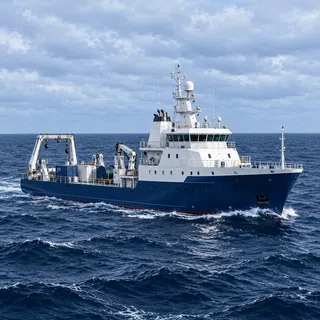
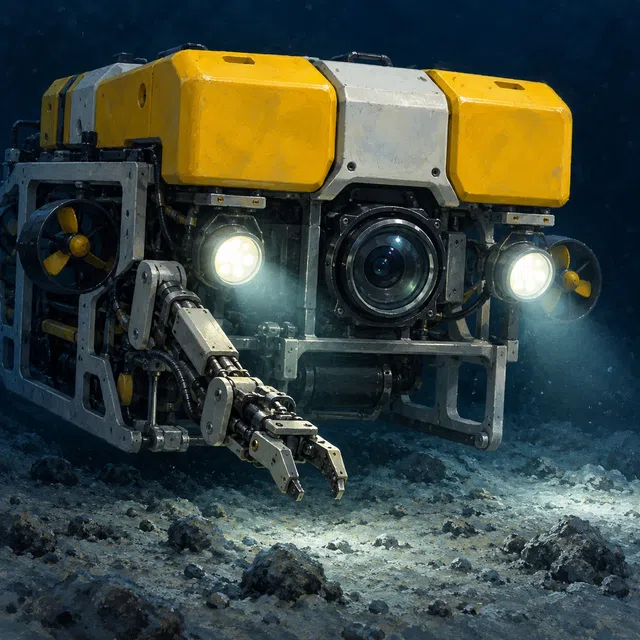
A research ship controls an uncrewed deep-sea robot, a conventional ROV. What connection normally carries control commands and live images?

Correct!
A conventional research ROV is connected to the ship by a long cable, often called a tether. It carries control commands from the ship to the vehicle, and measurements and live images back to the surface. In many systems, the cable also supplies electrical power to the robot. ROV stands for remotely operated vehicle. People on board watch the camera images and control the robot’s movements. If a manipulator arm is fitted, they can use it to collect samples, for example. Cameras, lights, and other measuring instruments make the robot a tool for exploring both the seafloor and open water. The cable can contain electrical conductors and optical fibers. This allows several tasks to share one connection: supplying power, transmitting commands, and returning data. The technical equipment depends on the particular vehicle. Autonomous underwater vehicles, or AUVs, often carry out preplanned missions without continuous direct control from a ship. There are also hybrid vehicles that combine different operating modes.